Few people associate novelizations with fine literature, and rightly so. For the most part, novelizations are a paycheck for struggling authors. The effort is usually phoned in, with the author doing little more than putting the screenplay in past tense and calling it a day. But in rare cases, an author will take things a step further. A prime example of this is Alan Dean Foster’s excellent novelization of John Carpenter’s debut film, Dark Star. In that case, Foster delved deep into the minds of the characters to present an intriguing psychological study of people in isolation. Another good example is Brad Carter’s fantastic work on the novelization of Cruel Jaws, from Encyclopocalypse Publications.
For the uninitiated, Cruel Jaws is a 1995 sharksploitation movie by Italian filmmaker Bruno Mattei, who brought us such gems as Night of the Zombies (1980) and Robowar (1988). Following on the heels of previous Jaws knock-offs like The Last Shark (1981) and Deep Blood (1989), Mattei serves up a collection of scenes harvested from multiple Jaws films, such as an exploding boat and the shark eating a pair of divers (Jaws 2), a red herring tiger shark (the original Jaws), and a couple making out in the water and getting interrupted by their friends (Jaws 3-D). It stars a cast of unknowns, including a Hulk Hogan lookalike, who sleepwalk through 96 minutes of thinly written and statically directed mush that’s a real slog to get through. Aside from stock footage, it lifts all its shark footage from either the Jaws films, The Last Shark, or Deep Blood. To call it bad is an insult to bad films. And yet, perhaps due to Mattei’s sheer audacity, it has become something of a curiosity and has therefore garnered a cult following.
“I’d rather be wrestling.”
The novelization first dropped in 2020 as part of an effort by Severin Films to capitalize on their library of catalog titles. In 2024, Severin partnered with Encyclopocalypse to release a new edition. For a property like this, the expectation would have been the standard fast and dirty novelization, a tie-in product whose sole purpose would have been to make some easy cash and boost awareness of an existing property. But Carter was evidently not content to leave it at that, and instead poured everything he had into making the novelization the most enjoyable experience he could offer his readers. Did he succeed? In a word, yes. In spades.
To say that Cruel Jaws the novelization is better than the movie would be a contender for understatement of the year. Carter breathes such energy and passion into every page, it’s impossible not to have a good time. The most amazing part is that he did so while hewing closely to the movie’s overall structure. All the story beats are there, as are all the film’s many characters, and even most of the lines of dialogue ripped straight from the Jaws franchise. And yet Carter goes beyond that, infusing everything with a depth and complexity that was lacking in the source material. That’s not to say this book is on par with Moby Dick. The point is that Carter took the existing framework of the movie, which could generously be described as sketchy, and added texture and nuance. He put meat on the bones. And then let a shark chew on it.
The most obvious area where Carter improved things was with the characters. In the film, they’re one-dimensional, lifeless, dull. Bad dialogue is delivered by worse actors. The characters are never properly introduced, so it’s difficult to keep track of who everybody is or how they’re connected to each other. It’s even harder to care. But Carter takes the time to develop each and every one, even the side characters. Billy Morrison, the Hooper stand-in, is trying to kick his cocaine habit. Vanessa is a sex addict. Dag is still haunted by the recent death of his wife. Francis is a functioning alcoholic. More than that, though, the characters evolve over the course of the story. They have arcs and through-lines, even if those through-lines aren’t necessarily what we want for them. And that’s how you create good drama. Since Carter almost slavishly follows the film’s narrative, one might have expected these things to feel forced and nonsensical, but every moment is perfectly organic. The end of every arc in a story should ideally feel at once surprising and inevitable. That Carter could come anywhere close to achieving that, given the material he was working with, borders on miraculous.
“Whatever you do, don’t act!”
There are times, though, where Carter detours into original material, and it’s always for the better. A trio of mafiosos introduced late in the movie almost as an afterthought show up earlier in the book. That gives Carter time to develop them properly, along with their relationship to Sam Lewis, the primary antagonist and stand-in for Larry Vaughan. It’s pulled right from the pages of Peter Benchley’s original Jaws novel, with the tension between the gangsters and Lewis/Vaughan stemming from the shark’s impact on their bottom line. Yet Carter manages to make it feel fresh, with the threat seeming more immediate. In the movie, the thugs are unimpressive and bland, but Carter’s version feels like The Sopranos. When they finally meet the monster shark, the movie goes for cheap laughs, but Carter plays it straight, upping the horror, going just over-the-top enough to get a giggle, but without overplaying his hand.
Ronnie, Lewis’s son, gets a lot of attention in the book, graduating from nuisance to full-fledged villain. Carter introduces an element of incest, with Ronnie lusting after his sister, Gloria. It’s creepy and disturbing, and it pairs nicely with his bullying behavior. Aided by his groupies, Ronnie commits full-on assault, breaking and entering, and cruelty to animals. He’s a true sociopath, the sort who believes that because of his wealth and status, he can do anything he wants. His father, on the other hand, is far from the sleazy, money-hungry caricature of the film. He still prioritizes money and power, but he’s not as brazenly callous as his cinematic counterpart. The reader gets the sense of a man who has worked hard to get where he is and doesn’t want to jeopardize it. And when the shit hits the fan, it becomes clear just how tenuous it all is. Lewis is only one disaster away from losing everything. It’s possible to sympathize with and even respect him a bit while still disapproving of his actions.
Especially delightful is how Carter handles Dag Sorensen. The movie establishes his backstory with a throwaway line about an accident that cost him his wife and his will to live. But the line is delivered without feeling and is quickly forgotten. Carter makes us feel it, though, taking us back through Dag’s memories as he relives it, making us experience the horror and pain. There’s also a reference to his past as a whaler in the North Sea, but the movie doesn’t do anything with it. Carter delves into it, though, exploring Dag as a Swedish immigrant and a real badass. The film’s climax has a few shots of Dag firing a shotgun at the shark, but in the book, he goes toe-to-toe with it, firing exploding harpoons in a sequence that’s both tense and delightfully absurd, culminating in Dag leaping onto the shark Gregory Peck style and stabbing it with harpoons.
There are some fun character additions, too. A black deputy who went unnamed in the film gains the name Lamar, along with a backstory about transferring from out-of-state after angering his superior. He gets some great scenes, putting Ronnie in his place and squaring off with a racist gun salesman. There’s also a town nut character, Crazy Old Isaac, somewhat in the same vein as Crazy Ralph from the Friday the 13th films, along with his friend, an Indian guru named Vijay. And there’s Osiris, a small-time drug dealer who fakes a Jamaican accent to impress the locals.
One way in which the novel deviates wildly from the film is the addition of copious amounts of sex. At one point, I joked that if I hadn’t already seen the film, I would’ve thought the book was based on a porno. The added sleaze is not a bad thing, though, instead bringing some sorely needed entertainment value while also strengthening character motivations. Carter uses all the sex to explore themes of jealousy and betrayal, and it all ties together in the end.
And then there’s the shark. In the film, the shark is explicitly stated to be a tiger shark, but all of the shark footage, whether it’s stock footage or lifted from a previous film, clearly depicts a great white. Carter, however, actually describes a tiger shark, with a wedge-shaped head and stripes on its back. Late in the film, there’s a throwaway line about the shark being the product of a military genetic engineering experiment. Carter takes this and runs with it, elevating the shark from a clumsy Bruce clone to a true monstrosity, an almost megalodon-sized nightmare that’s part shark, part machine, and part god-knows-what. It bleeds gloppy blood that comes to life and attacks people. It eats everything in sight regardless of hunger, strategically attacking with military precision. It’s a ridiculous premise, but Carter sells it, and scenes that seemed silly in the movie actually become suspenseful and thrilling in the book. A writer friend of mine once gave me a great piece of advice: if you can’t hide it, plant a flag on it. Carter is clearly familiar with this. By having characters in the story actually observe how fantastical everything is, that gives him license to go with it and bring the reader along for the ride.
“Nom nom nom.”
Cruel Jaws the novelization may not be the greatest novel ever written, but it’s a masterclass in re-writing. Anyone writing a novel or screenplay that’s been through multiple drafts and still isn’t working would do well to watch Cruel Jaws and then immediately read Brad Carter’s novelization. He takes a structure that was hodgepodge at best and fine-tunes it into something that flows perfectly. Awful dialogue is replaced with good dialogue. Even lines taken verbatim from the movie somehow work, either thanks to altered context or simply not being ruined by bad acting. Scenes that were rushed or awkward in the film are transformed into well-paced and effective storytelling. Unnecessary padding becomes essential character-building. In short, the gulf in quality between the film and the book is as vast as it is amazing. A movie like Cruel Jaws should never have become a novel this good, but it did. Now we have something that can stand alongside, if not Peter Benchley’s original Jaws novel, at least the sequel novelizations by Hank Searls. Carter’s version is good enough that it could even serve as a starting point for a new movie remake. That would be something worth seeing. But even if not, the book stands on its own. It’s a rompin’ good time.
It’s generally agreed that Jason Goes to Hell: The Final Friday is among the worst of the Friday the 13thseries, if not the worst. It’s no secret that the genesis of the film was convoluted, with the intellectual property passing from Paramount to New Line and key aspects getting lost in the process. New Line couldn’t use the Friday the 13thtitle, and fan-favorite Tommy Jarvis couldn’t appear in the film because New Line only had a license to use Jason himself. As often happens in Hollywood, the screenplay went through numerous revisions by multiple writers, and the director was fired late in the production and half the film re-shot. Such things seldom bode well for any movie.
One might ask how a movie that’s part of a series widely regarded even by its fans as little more than enjoyable trash could be any worse than its peers. The easy answer is that it fails to deliver the goods. When we sit down to watch a Friday the 13th movie, we have certain expectations. Chief among those is that we’ll see a bunch of dipshit teenagers get sliced and diced by a marauding killer. Most of the time, that killer is Jason Voorhees, though there are two notable exceptions: in the original film, it was his mother, Pamela, and in Part V, it’s a grieving paramedic claiming revenge over the death of his son. What the producers of Jason Goes to Hell serve up is something decidedly different (spoilers ahead if you haven’t seen the film).
First-time director Adam Marcus has commented that he wanted to play with audience expectations in the opening of the film by depicting a stereotypical scene familiar from previous entries and then flipping it. A girl goes to a cabin alone, strips down for a shower, and is then pursued by Jason only for a SWAT team to show up and blow Jason to smithereens. It was all a setup, and the girl was the bait. So then Jason’s remains are hauled to a government facility for examination, whereupon the medical examiner is seized by a sudden compulsion to eat Jason’s still beating heart. At that point he’s possessed by the spirit of Jason and goes on a new killing spree, hopping from body to body seemingly at random.
Jason go boom. Image copyright: New Line Cinema.
There’s a brief sequence in which some teenage campers are hacked up, but that’s the only bit that feels remotely like a traditional Friday the 13th movie. After that, the film takes some unexpected and at times baffling turns. The first big problem we encounter is that the movie doesn’t seem to know who its protagonist is. Say what you will about the other films in the series, but we always had one person who we could identify as the main character, whether that be Alice in the original film, Ginny in the second, or Tommy Jarvis in later films. Here we’re introduced to a bunch of characters in rapid succession, and it isn’t at all clear who we’re supposed to be paying attention to.
First we meet bounty hunter Creighton Duke, played by Steven Williams, who would go on to play the recurring role of X on The X-Files. He initially wins us over with a callback to Jaws, promising to hunt down Jason and deliver “the mask, the machete, the whole damn thing.” Almost immediately we shift to Diana Kimble, played by Erin Gray of Buck Rogers fame, who then seems like she’s going to be our heroine, and we follow her for several scenes. But then she gets bumped off and we meet her daughter Jessica (Kari Keegan), who seems way too old for Erin Gray to be her mom, and it seems like she’s going to be our focus. The movie then shifts to Steven (John D. LeMay), a character who had been unceremoniously introduced a few scenes before and seemed at best like cannon fodder. We’re a good twenty minutes into the film at this point and we still don’t have a clearly defined protagonist. We follow Steven for a good bit before switching back to Jessica, then we toggle back and forth with both of them sharing the spotlight for the climax.
“I’ve got information for you, Mr. Mulder. But I’ll have to stab you first.” Image copyright: New Line Cinema.
It might have been possible to pull this off except for the fact that neither character is introduced in a way that allows us to bond with them and form any sort of attachment. None of the characters in the Friday the 13th series are especially complex, so I’m not expecting Shakespeare here, but in previous films we got a clear impression of who were were dealing with. Alice was an artsy type who cared about children, Chris was processing past trauma and trying to face her demons, Tommy Jarvis was into special makeup effects before becoming obsessed with killing Jason. And so on. But we get no sense of identity or personality from these characters. They’re just there, reacting to things, so there’s no real investment in them. Now it’s true that the Friday the 13th series is full of such characters. Much of the fun of the series stems from the fact that we don’t really care what happens to anybody, so we can watch Jason hack away with impunity and not feel any guilt. But there’s always at least one character infused with some sympathetic quality who we can root for when it comes time for the final battle, and that’s lacking here.
There’s a baby as a stakes character – though since babies can’t really participate in the action, they tend to act more as MacGuffins than actual characters. Steven and Jessica have a kid together, and it is this child who Jason ultimately wants to possess so that he can be reborn. There’s a bit of business where Steven and Jessica have split up, and Steven wants to make amends, but we’re given no details about the breakup or why we should care whether these two get back together. She’s moved on and is seeing this douchey TV producer who at one point actually wants to use Diana’s body as part of a publicity stunt. I didn’t feel bad when that character died.
“Deader than shit.” Image copyright: New Line Cinema.
A criticism often leveled at this film is that the plot is confusing and nonsensical. That is very much true. The core premise is a jumbled mess. For whatever reason, Jason’s heart is indestructible, and it can hop from body to body. But for some reason, it needs to find its way to another Voorhees so Jason can be reborn. But why would Jason care about that? If one body is as good as the next, why bother finding his way to a Voorhees so he can get his original body back? What difference does it make? Once he’s in the body of the medical examiner, he should have been good – killing spree can resume. But instead he hops from body to body almost at random. It seems as if he chooses bodies that will allow him to get close to his intended victims, but since when has Jason cared about that sort of thing? His style is to stalk in the shadows and pop out, surprising his victims. Also, with black ooze and blood seeping from every orifice, the shambling, zombie-like possessed bodies are hardly inconspicuous. At one point, he takes the time to shave the mustache off a guy’s face before transferring bodies. Why? So that the body will look more like his own? Who cares, when you’re not planning on staying in that body for very long?
“Braaaaains!” Image copyright: New Line Cinema.
Creighton Duke acts as Mr. Exposition, providing information on Jason and how to destroy him. But it’s never made clear how he gained his knowledge, or even what his motivations are. There’s a bit at the end where he says to Jason, “Remember me?” hinting at some sort of history between the two, but that’s all we get. Director Adam Marcus later explained that the idea was that Duke’s girlfriend was killed by Jason, so he’s out for revenge and has devoted his life to studying him and learning how to kill him, like some kind of modern Van Helsing. But since that backstory is not revealed in the film, it leaves us with little to go on.
“I know we just met, but please break my fingers.” Image copyright: New Line Cinema.
At one point, Steven willingly lets Duke break his fingers as payment for information on how to kill Jason. But considering at this point in the story, Duke is some rando that Steven just met in jail, there’s no obvious reason for him to believe that Duke’s information is reliable. It’s also not clear why Duke felt the need to do this. If Duke’s goal is to kill Jason, why not tell the whole world how to do it? Initially, it appears Duke’s only motivation is money: he’s charging $500,000 to Jessica’s TV producer boyfriend for the “service” of ridding the world of Jason. But he later says his motivation isn’t the money. Also, how does breaking some random dude’s fingers compensate for that financial loss. Maybe Duke is testing how far Steven is willing to go for information to ensure he’s sufficiently devoted to the cause. But Duke makes a point of saying that only a Voorhees can kill Jason, so Steven’s not even critical to the success of the plan. With a set of broken fingers, Steven manages to do the cliché prison escape where you grab the guard through the bars, steal his weapon, force him to open the door, then trap the guard in the cell. Surely someone as resourceful as Duke could have done that himself.
Given all the nonsense already mentioned, one might think it impossible to find anything to like about this movie. And yet it’s hard not to observe that the first eight entries in the series are essentially interchangeable, while this one dares to do something different. It was a ballsy move to eliminate the classic version of Jason from the proceedings. While the body-hopping plot might be pretty nonsensical, it does at least give us an interesting change of pace, and there is a body horror element that makes this movie unique in the series. Jason’s heart comes to life, oozing out of each body’s mouth like some kind of alien parasite, worming its way into the mouth of the next victim. Eventually it starts to look like the chestburster from Alien, becoming a full-fledged monster. At one point, after a transfer, we see the former body grotesquely dissolve in what is probably the film’s most memorable horror set piece. It becomes a different sort of horror movie than any of the others, largely avoiding the typical slasher format that had fallen out of vogue when this movie went into production.
Director Adam Marcus has a bit of fun with the mythology, which some might view as controversial. Venturing into the Voorhees family home, Steven discovers the Necronomicon Ex-Mortis and Kandarian dagger from the Evil Dead series, hinting at a connection between the two franchises. Because New Line did not own the rights to the Evil Dead series, Marcus could not make the connection explicit, but he has said the idea was that Pamela Voorhees tried to resurrect Jason using the Necronomicon, and the result was a body possessed by a Kandarian demon. This, to him, explains why Jason is unkillable. In the movie, it is only a Voorhees who can kill Jason by stabbing him in the heart with the Kandarian dagger.
“Kanda…” Image copyright: New Line Cinema.
This is a fun little homage, but it doesn’t actually work in the context of either series. In earlier films, Jason keeps his mother’s decapitated head, along with her sweater, in a candle-lit shrine. Hardly the sort of thing that the Deadites from Evil Dead are known to do. Also, when possessed by a Kandarian demon, a person’s eyes turn white. And it is established in the Evil Dead series that a Deadite can only be dispatched by bodily dismemberment, not getting stabbed by the dagger. So none of this really works. Also, since Marcus could not overtly include any of this, the appearance of the Evil Dead props serves mostly as an inside joke, and we never get a full explanation as to what’s really going on. Fans of the Evil Dead series will pick up on the allusion and can make their own connections, but there are still a lot of gaps to fill in, and someone who isn’t familiar with Evil Dead will be completely lost.
So is there anything to enjoy about this movie? Well… yes. It lacks the humor and sense of fun that characterizes the rest of the series, and almost across the board doesn’t really feel like a Friday the 13th movie. But in taking itself more seriously, it comes across as more of a genuine horror film than any of the others. The premise is unusual, though I understand there are some similarities to The Hidden, which I haven’t seen. The lighting is murky, the sound is bad, and most of the acting is sub-par. Harry Manfredini, who composed the music to the first five Friday movies, and whose memorable ki-ki-ki-ha-ha-ha continued to appear in subsequent films, delivers a lackluster synthesizer score. Lastly, with Adam Marcus removed from the project, original Friday director Sean Cunningham took over, only to deliver a static slog of a movie that feels more like a direct-to-video cash grab than a theatrical release. And yet… there’s a certain nostalgic charm that saves it from being a total disaster.
There’s enough gore, even in the watered-down R-rated cut, to keep things interesting, and while it’s not exactly fast-paced, things move along quickly enough that it never gets completely boring. That may not sound like much of an endorsement, but I can’t help but respect the filmmakers for trying something different in a series that was over a decade old and had become pretty formulaic. It’s not the movie they wanted to make. Sean Cunningham had been trying to get Freddy vs. Jason off the ground since 1987, and that project would not see the light of day until 2003, though the end of Jason Goes to Hell hints at its impending release. But at least Cunningham was able to exert some measure of creative control over a series that had gotten away from him, and he pushed things in a direction that makes this one stand out from the crowd – in a way that’s both good and bad. I won’t challenge anyone who doesn’t care for this movie. It’s certainly not my favorite. However, there’s just enough going on here that it’s not a total disaster.
The ending teases Freddy vs. Jason, but it would be another decade before we got that far superior film. Image copyright: New Line Cinema.
So what’s the final verdict? If you’re looking for something in keeping with the rest of the Friday the 13th series, this one’s not for you. It’s not exactly The Exorcist or Alien. No one is ever going to call this one of the all-time great horror films. But if you’re in the right frame of mind, you might discover something that’s actually enjoyable.
I finally watched Batman: Return of the Caped Crusaders. In case you weren’t aware, that’s a 2016 animated film that reunites Adam West, Burt Ward, and Julie Newmar in their iconic roles from the 60s TV series.
I can say without reservation that I had an absolute blast. I had read online that it leaned a little too heavily into nostalgia, so I was worried that there would be a lot of pandering without much plot, but this was not the case. I was also worried that it would lean too heavily into crude modern humor and display disrespect for the original series, but this also was not the case. Across the board, the production team displayed great reverence for the original material. It was a very funny movie, but the humor was in keeping with that of the original series. In every way, it felt like a direct continuation — to the point that I’m prepared to consider it a canonical part of the original series.
West, Ward, and Newmar were in proper form throughout. I was wondering if the passage of time would prevent them from fully getting back into character, but they pulled it off effortlessly. West’s voice had become pretty gravelly at that point in his life, so that made it a bit of an effort to believe that this really was the same Batman, but his enthusiastic performance largely compensated for that. Ward and Newmar’s voices have hardly changed, though, so it was easy to believe that these were the same characters featured in the original series and that no time had passed.
Voice imitators rounded out the rest of the cast. Most of them do a pretty good job. You could easily tell that Alfred, Commissioner Gordon, and Chief O’Hara were voiced by different people, but the performers were convincing enough that I could buy into it. Aunt Harriet was probably more convincing than either of them. The weakest link by far was Penguin, who sounded nothing at all like Burgess Meredith. That said, the voice actor at least played the character properly, punctuating everything with a satisfying “Waugh, waugh, waugh.” Of all the voice imitators, though, Joker and Riddler were far and away the best. It really sounded like they’d resurrected Caesar Romero and Frank Gorshin and brought them in for a recording session. Spot-on perfection.
Image copyright: Warner Bros.
Perhaps most interesting was the overall style of the film. In every way, they kept to the spirit of the original series, but at the same time they were able to give it a modern vibe. The architecture of Gotham City was not the surreal gothic style we’re used to in modern Batman, but rather of the sort you’d expect to see in the 60s. And yet, it was decidedly not Los Angeles, with taller buildings in a sprawling cityscape, and dark lighting to give it some mood. So while it didn’t quite feel like modern Gotham, it didn’t really feel like the same Gotham we saw in the original series. Sort of a hybrid of the two, I guess. Bottom line, Gotham never really felt like Gotham in the original series. In this movie, it did. But at the same time, it felt like a Gotham Adam West’s Batman could inhabit.
There were other interesting aspects to the film’s visual style. For one thing, Commissioner Gordon finally grew a mustache, and he found his glasses. So they managed to make him actually look like the character from the comics while still coming across as the character from the show. Likewise, Alfred got contacts, I guess, because he wasn’t wearing his Coke-bottle glasses. They drew him like Alan Napier, but sans spectacles. It was a change I didn’t even notice until halfway through the movie. This bears out my assertion that if the show had gotten a fourth season, they could have made these tweaks without damaging continuity.
Image copyright: Warner Bros.
I especially enjoyed how they handled the Joker. Even though he was drawn to look like Caesar Romero, and the voice actor nailed his imitation, there was something subtly menacing about this take on the character that wasn’t present in the original series. There were hints of the modern, more maniacal Joker in this presentation of the character. He seemed a tad more unhinged, even brazenly boasting about murder at one point. Sure, Caesar Romero did that once or twice, but somehow they sold it better in this case. And it didn’t hurt that during the climax, when things were blowing up and there was utter chaos all about, he was just laughing maniacally through it all, unlike Caesar Romero’s original, who usually got grim-faced when his plans would go south.
But the way they presented Batman himself was the most interesting. They were absolutely drawing Adam West, and he cuts a similar figure. But they tweaked his upper body to be ever-so-slightly more muscular, and the cape draped over his shoulders in a way that was more evocative of modern Batman. In the original series, West often moved with a sort of stiffness that shattered the illusion, but the animators gave this Batman some of the grace and control you’d expect from the real Batman. The fight scenes in the original series had the awkward staging of any 60s show, but these fight scenes were carefully choreographed for greater effectiveness — while still retaining all the Pow-Zap-Whams. And the action scenes were staged with greater intensity and more effectiveness than in the old days. The end result was that it had the energy of a modern movie, but all the spirit and charm of the classic series.
Image copyright: Warner Bros.
My only complaints were in things that really shouldn’t have been changed. They didn’t bother to render Commissioner Gordon’s office the same way it looked in the original series. Okay, maybe he got a new office. I’ll let that go. But Wayne Manor and the Bat Cave looked completely different, and that I cannot forgive. We still had the bad poles and the red phone and the statue of Shakespeare and the atomic generator, and the general layout was more or less the same, but all of the details were different. That gave it sort of an uncanny valley quality, where it felt the same but wasn’t. At least they didn’t change the Batmobile. They must have known that would be going too far.
They also pulled a Superman III. Part of the plot involved Batman being given a drug that slowly turns him evil. That dominated the middle portion of the film. It’s not a bad dramatic device, and they often did that sort of thing in the series, but given that this was likely the last time West would ever get another crack at playing the character (that turned out not to be the case), I would have preferred to just let him be heroic all throughout.
Those are pretty minor complaints, though. Overall, it was a great time. Not only was it proper Adam West Batman, but in its own way, it was proper Batman, period. There were lots of easter eggs for die-hard Bat-fans to appreciate, and there were even cameos by most of the more memorable Adam West original villains, such as Bookworm, King Tut, Shame, No-Face, and others. Bottom line, this was a beautifully rendered love letter to Adam West’s tenure as the caped crusader and is sure to delight both hard core and casual fans of the character.
Image copyright: Warner Bros.
I then watched Batman vs. Two-Face, the 2017 follow-up to Batman: Return of the Caped Crusaders. Adam West, Burt Ward, and Julie Newmar all return to their roles, and Lee Meriwether even gets a neat little cameo. But most delightful of all, none other than William Shatner takes on the role of Two-Face. For the first time, Adam West’s version of Batman takes on one of the most high-profile Batman villains who never made it into the original series (though had the show been renewed for a fourth season, Clint Eastwood was in talks to play the character).
They actually draw 60s-era William Shatner as Harvey Dent, complete with the trademark Captain Kirk hair swoosh. I was expecting Shatner to really ham it up in the role, but he plays it straight. As Dent, he talks in his normal tone of voice, never over-acting and playing him like a regular guy — though with a hint of instability. As Two-Face, he talks in a gravelly voice that’s almost unrecognizable, and he really pours on the intensity. Not in a campy way, but in a truly menacing way. Richard Moll is still the definitive Two-Face, but Shatner might actually be a close second.
I was wondering if any of the other villains would return for the sequel, and they do, but in a reduced role. That’s just fine. Given that Two-Face never made it into the original series, I wouldn’t have wanted any of the other villains to steal the spotlight away from him. Joker, Penguin, and Riddler all have a brief appearance at the opening of the film, played by the same voice actors, but then they step gracefully aside to make room for the titular villain. That said, King Tut and Bookworm both get a chance to shine, with speaking roles this time. Jeff Bergman does an excellent Caesar Romero, but his Roddy McDowall leaves much to be desired. Wally Wingert, on the other hand, not only does a spot-on Frank Gorshin, but an utterly perfect Victor Buono. It had me wondering if Buono had actually returned for the role (he died in 1982). Julie Newmar’s Catwoman still features prominently, though her role is slightly reduced. I was only slightly bothered by that. Again, it was important to let Two-Face shine.
Two-Face wasn’t the only classic villain who had never appeared in the original show to finally make it into the Adam West canon. Dr. Hugo Strange, who first appeared in the 40s, has a featured role in this film. He never upstages Two-Face, but he’s central to the plot. They also introduce Harleen Quinzel, and they flirt with a relationship between her and the Joker. I thought perhaps they were setting things up for another sequel, but alas, it was not to be. Adam West passed away shortly after completing this film.
Image copyright: Warner Bros.
The visual style carries over from the first film, with all the characters and locations rendered the same way, and with similar pacing and staging. The overall tone is basically the same, though this one is slightly darker. There are still plenty of laughs, but there are long stretches of the movie that are almost totally serious. I didn’t mind that, though. The overall sense of fun is still present, and the movie is well-paced and never dull.
It’s a shame Adam West is no longer with us. I would have liked to see more of these. But at least they were able to do these two, and they make a wonderful send-off for Adam West’s career as the Caped Crusader.
You know, in a world where Ghost Shark exists, it would stretch credibility to say that Jaws: The Revenge is even the worst shark movie ever made, let alone the worst movie ever made. Admittedly, the premise is silly. But then, plenty of horror movies have a silly premise. Certainly from Part VI on, the Friday the 13th series veers into some pretty ridiculous territory with a zombie Jason Voorhees on the loose. And yet people have no problem watching those movies. Yes, Jaws: The Revenge requires a buy-in, but if you can make that leap, it’s a perfectly entertaining movie.
There’s much to appreciate in Jaws: The Revenge. You’ve got solid performances from Lorraine Gary and Michael Caine, great cinematography, a heartfelt examination of grief, a strong female protagonist, three particularly bloody and violent kills, an exciting climax, and a great death for the shark (in the theatrical cut). Surely there are worse movies out there — and I mean to prove it. So in that spirit, here are my picks for ten shark movies that are worse than Jaws: The Revenge.
Killer Shark (1950)
Roddy McDowall co-produced and starred in this D-grade snooze-fest before climbing the ladder to stardom. He turns in a serviceable performance, as does the rest of the cast, but the movie is heavy on talk and light on action – and sharks, for that matter. The emotional thrust is that McDowall’s fisherman father loses his leg to a shark, so the son takes to the sea to kill sharks and raise money to help out his invalid parent. Unfortunately he runs into trouble when the crew he hires turns out to be a bunch of cut-throats. Not the worst movie ever made, by far, but certainly forgettable.
Shark! (1969)
Featuring the screen debut of Burt Reynolds as a two-fisted mercenary hired to retrieve sunken treasure from shark-infested waters, this should be a sure-fire winner. Sadly, it’s not. The plot slogs along at a snail’s pace, with hardly any shark action and little else going on. Something of a forerunner to 1977’s vastly superior The Deep, but without the memorable performances. Sorry, Burt. I loved you in Smokey and the Bandit, but this one was a dud.
Mako: The Jaws of Death (1976)
This is actually a pretty decent shark flick, all things considered, and the plot is kind of unusual. B-movie king Richard Jaeckel plays a man who develops a psychic connection to sharks after encountering a shaman. He spends the movie crusading to protect them, actually murdering anyone who harms a shark. Kind of a weird look at ecoterrorism with a supernatural twist well before the Jaws franchise veered into that territory. Not a great movie by any stretch, but certainly entertaining. However, Jaws: The Revenge is better.
Tintorera (1977)
This Mexican movie about some female tourists who find themselves in various misadventures is so dull I couldn’t even sit through the whole thing. I watched about half of it and I think there was maybe one shark attack. I’m really not sure what the rest of the plot was about because my mind was wandering through the whole thing.
Deep Blood (1989)
Three boys swear a blood pact to remain friends and watch each others’ backs for the rest of their lives. When one of them is killed by a voodoo spirit that has taken the form of a killer shark, they take to the water to hunt the beast down. The premise may sound silly, but I promise that’s not the worst part. For the bulk of the movie, they just wander around and complain instead of actually getting anything done. As is often the case with bad shark movies, there’s little actual shark action – or action of any kind. It’s just dull. So dull it makes Jaws 3-D and Jaws: The Revenge look like Oscar material.
Cruel Jaws (1995)
This notorious entry by exploitation filmmaker Bruno Mattei (under the pseudonym William Snyder) has to win the prize for shameless ripoffs. Actually marketed in some parts of the world as Jaws 5, it blatantly lifts footage from other, better shark movies, most notably The Last Shark (1981) and Jaws 3-D (1983). It also lifts most of its climax from Deep Blood. Copyright issues kept it from being released in America for decades, but it’s finally available on blu-ray. This is nothing to celebrate, however. It’s only slightly more interesting than Deep Blood, with its only endearing quality (and that only barely) being all the call-outs to the original Jaws. Unless you’ve got absolutely nothing else to do or are just really curious, this one is skippable.
Shark Attack! (1999)
Casper Van Dien headlines this made-for-TV stinker about genetically modified killer sharks on the rampage. Unsurprisingly, there’s a lot of filler, and the CGI sharks leave much to be desired. Other than that, it’s the usual Jaws knockoff material. Hardly riveting and a bit of a chore to sit through, somehow it managed to spawn a franchise.
Shark Attack 2 (2000)
Director David Worth takes the premise from the original and runs with it, throwing in a bit lifted from Jaws 3-D about sharks escaping from their pens at an aquarium to wreak havoc on a resort town. After that it’s more imitation Jaws, but Worth knows how to have fun with it. He keeps the pace moving and the blood flowing. He should also be commended for taking a moment to point out that these sharks are man-made monsters and that ordinary sharks are not bloodthirsty killers. The performances are flat and the special effects are not-so-special, but it’s a good time. Not as good as any of the Jaws sequels, but still fun.
Shark Attack 3: Megalodon (2002)
Featuring John Barrowman of Doctor Who fame, this marks the third and final entry in the series. David Worth returns as director, this time really going for the gusto with the biggest, baddest shark in the fossil record. Playing much like the Jaws 5 we all wanted (at least I did) but never got, this ticks all the boxes with multiple attack scenes, plenty of action, and one of the most notorious one-liners in movie history. Falling decidedly into the so-bad-it’s-good category, this will amuse even the most discriminating shark movie enthusiast. That said, the Jaws sequels are still better.
Maneater (2022)
In this blatant Jaws clone, a shark hunter goes after the great white that killed his daughter. The shark may not be psychic, but it is a serial killer, taking humans not for food, but for sport. The kills are pretty satisfyingly bloody, but you have to sit through a lot of meaningless chatter to get to them. None of the characters are especially memorable, the dialogue is atrociously on-the-nose, and the climax is a let-down. Just when I was gearing up for a protracted battle with the shark, they easily kill it with a shotgun. There’s almost no suspense, the CGI shark looks terrible, and the performances are competent at best. Add on an unnecessarily long epilogue hinting at a sequel we surely don’t want, and you’ve got 90 minutes of pure mediocrity. All that said, it’s actually a pretty fun movie. Far better than some of the other titles on this list, even coming close to the quality of the third and fourth Jaws movies – but not quite.
So there you have it: proof that Jaws: The Revenge is not the worst shark movie ever made. It may never make it onto a list of the 100 best movies of all time, but the fourth Jaws still comes out ahead of many other movies that tried to follow in the wake of Spielberg’s masterpiece. Next time you’re thinking about watching a shark movie other than the original Jaws, remember that you could do far worse than its sequels.
It was the sort of pitch meeting that becomes the stuff of legend. Kenneth Johnson was trying to sell NBC on a TV movie based on Sinclair Lewis’s novel, It Can’t Happen Here, which depicts the United States degenerating into fascism. But the network execs weren’t interested, and one of them proposed that the fascists be alien invaders. Initially, Johnson disliked the proposal, but eventually he came around. V, (which, contrary to popular belief, stands for Victory, not Visitors) debuted on May 1st, 1983 as a two-part mini-series and became an overnight sensation. It depicted the arrival of ostensibly benevolent human-like aliens who claimed to have come to Earth seeking our help in saving their dying planet. But intrepid reporter Mike Donovan (Marc Singer) soon learns that the Visitors are lying. Hidden behind their human masks are horrible reptiles with snake-like tongues, and they are here to steal our water and harvest humans for food. The Visitors gaslight the populace, feeding them lies about a conspiracy of scientists as an excuse to seize total control of the planet. Most of society goes along with it, but those few humans who know the truth band together to resist. The saga is all but forgotten today, so it may surprise younger people to learn just how huge it was at the time. There were novels, comic books, t-shirts, and action figures. The cast made the cover of numerous magazines. Kids at school were flicking their tongues in imitation of the reptilian aliens and talking endlessly about how the beautiful Diana (Jane Badler) unhinged her jaw to swallow a guinea pig whole. With all of the hype over the horrifying and sensational imagery of that first episode, the true core of the concept is often overlooked.
V is primarily about fascism, about how it grows and festers, insidiously taking root, fooling much of the populace into viewing it as normal, into accepting the dominance of its leaders and turning a blind eye to its atrocities. And it is about the heroism of the resistance fighters who risk everything (or in many cases have nothing left to lose) to restore freedom. A criticism often leveled against the series is that this original mission statement was soon forgotten in favor of banal action and torrid soap-opera dramatics. The criticism unquestionably has merit. After the initial two-part mini-series, things did indeed go downhill. Eventually, way downhill.
The Visitors seize control through lies and propaganda.
The problems began right away. Kenneth Johnson’s original intention was to continue the saga as a series of TV movies, gradually unfolding a pre-planned story arc that would build to a satisfying climax. But the network only greenlit a single three-part sequel series that would wrap everything up nice and neat. As if that wasn’t frustrating enough, the network refused to allot the budget necessary for everything Johnson wanted to do, so now instead of flying around in starfighters, the aliens had to resort to driving cars. The network made it clear they didn’t want Johnson on the project because he wasn’t going to do it “as fast and cheap and dirty” as they wanted. So Johnson departed, leaving his show in the hands of bean-counters who clearly didn’t understand what they had on their hands. The sequel looks a bit cheaper than its predecessor, but the writing is still strong and continues to explore the horrors of fascism effectively, if somewhat less dramatically and with more of an emphasis on action. Everything is fine right up until the final moments, when some moron decided to ditch the originally scripted ending in favor of a silly deus-ex-machina that is widely criticized to this day. Despite the reduced budget and silly ending, V: The Final Battle is actually pretty good.
The follow-up mini-series was not quite as successful as the original, but the ratings were still strong enough that the network decided to move forward with a weekly series, and it was at this point that the cracks really started to show. The Final Battle had been executed based on Johnson’s original treatment, but now they were flying blind. The conventional wisdom is that the original V is excellent, V: The Final Battle is really good, and V: The Series is terrible. I agree with the first two statements, but I would like to challenge the third. It’s true that there is a noticeable drop in quality heading into the series. Faced with the unenviable task of relaunching a series that had decisively concluded and doing so on the tight budget and schedule of a weekly production, it’s not surprising that V: The Series fell far short of expectations. Interference from the network and a mandate to reduce a decidedly adult-themed show to something more “family friendly” didn’t help things either. The degree to which the executives just didn’t get it is best revealed by a memo which concluded with the words, “We don’t really care about the details, we just want to see aliens on motorcycles.”
Diana is less scary in the series… but arguably more fun.
Instead of a deathly serious drama about fascism, the weekly series becomes a more action-driven show featuring alien martial arts masters and monster clones. In the mini-series, the alien leader Diana is a terrifying blend of Erwin Rommel and Josef Mengele. By the time the weekly series arrives on the scene, she’s got a twinkle in her eye and leans into camp, berating her subordinates with lines like, “You incompetent fool!” The nightmarish scenes of shock troopers marching down streets and blasting innocent people give way to easily-dispatched cartoon bad guys. Ethnic characters are conspicuously written out in favor of new white characters. And worst of all, the show falls into a predictable formula of the Resistance thwarting Diana’s evil plot of the week for episode after episode. These are serious problems that are not to be overlooked, and it’s a genuine shame that the series never lived up to its potential. However, it has become common to dismiss all but the original two-parter as trash, and that is unfair. In their zeal to rip the show apart, the critics may have missed a few things. There are problems, yes, but even late in the series, after it had admittedly and thoroughly jumped the shark, it still had some good qualities. By no means am I arguing that the criticisms of the show are not well-deserved. I am merely saying that the series is not without merit. Plenty of people have already written extensively about the show’s shortcomings, so I want to focus for now on the things it did right, and that’s actually quite a bit.
Nathan Bates (Lane Smith) adds complexity to the early episodes.
For starters, the series plugs up a plot hole in Final Battle. Without proper facilities, how was the Resistance able to grow all that Red Dust bacteria that they used to defeat the Visitors? The series answers that question by introducing a new character: Nathan Bates (Lane Smith), who is unquestionably one of the best things about the series. Bates runs Science Frontiers, a company devoted to scientific and technological research. He’s a smug, self-important businessman who ruthlessly seeks to increase his own stature. It would have been easy for the writers to craft him as a one-dimensional mustache-twirling villain, but he’s surprisingly complex. The first thing we learn about him is that he took on the enormous risk of growing the Red Dust bacteria for the Resistance during the initial Visitor occupation. When the Visitors return, this time dropping all pretense of being our friends, Bates strikes a bargain with Diana. He’ll agree not to release any more Red Dust provided they leave Los Angeles as an open city, where neither Visitors nor Humans may bear arms and setting himself up as absolute ruler of the city. Bates claims he’s only stalling for time so they can develop a new, more permanent solution to the Visitor invasion, which may be true, but he also deploys his own private security force to maintain order in the city. He lords over Los Angeles, but he does preserve a sense of normalcy where people can go about their business without fear of the Visitors, all while the world is being torn apart beyond the city limits. Scenes between Bates and Diana are filled with tension, and as the Resistance persists as a threat to the tenuous peace he’s established, the pressure he’s obviously under grows and grows. If he has one definite redeeming quality, it’s in his devotion to his son Kyle (Jeff Yagher), who joins the Resistance to the continual frustration of the elder Bates. The father-son dynamic of these two characters is one of the most well-written elements of the show, with Kyle initially hating his father, and later coming to understand him better. Eventually, Nathan realizes he’s made the wrong choice in aligning himself with the Visitors when they conspire to eliminate him. He reaches out to Kyle for help, and it would have been interesting to see where this might have led. Sadly, the writers decided they were having trouble finding stories to tell within the open-city format, and they chose to kill Nathan off. They clearly didn’t realize what a great format they had on their hands. Despite its flaws, Bates and the open city premise was a dynamic setup with a lot more possibilities than the creative staff seemed to realize. Without them, it all fell apart.
The lovely Faye Grant as Resistance leader Julie Parish.
Another great aspect of the Nathan Bates chapter of V is the character arc of Julie Parish (Faye Grant). In the mini-series, Julie was one of the founding members of the Los Angeles resistance and quickly became their leader. What made her interesting was her youth and determination contrasted against her self-doubt. In the series, it seems as if they didn’t quite know what to do with her, and she does seem to be somewhat diminished from her former leadership role, which is a problem. However, they did manage to find an interesting niche for her to fill during this portion of the show. She begins working for Nathan Bates before the Visitors return and remains in that role when the invasion resumes. She pretends to shun her Resistance friends, instead presenting the appearance of throwing in with Bates to work on a new biological weapon to defeat the Visitors. Bates seems to be on the level in his desire to overthrow the invaders, and he initially respects Julie for her brilliance – and he is also attracted to her. There’s a wonderful amount of tension as Julie navigates the situation, dodging Bates’s advances while simultaneously spying on him for the Resistance. Slowly, Bates begins to suspect her. The tension mounts episode-by-episode and Julie struggles to maintain her cover. It couldn’t possibly go on forever, and the writers wisely refrain from stretching it out too long. When it’s time for the arc to end, it ends. That’s unfortunate but necessary, and it’s great while it lasts.
A criticism commonly leveled against V: The Series is that they completely dropped the Nazi allegory in favor of simplistic action and soap opera melodrama. It’s true that the emphasis did shift, and due to mandates from the network, they were not able to explore the serious subject matter with the same hard-hitting approach as the mini-series. However, anyone who claims there is no longer a Nazi allegory simply isn’t paying attention. The open city format is stated on-screen to be reminiscent of Lisbon during World War II, and the new Resistance headquarters, a restaurant called the Club Creole, is a deliberate callback to the anti-Nazi film Casablanca. The whole thing recalls Vichy France, with the uncomfortable “truce” increasingly favoring the Visitors as Bates imposes curfews and sets up checkpoints which make it difficult to move about freely. In one episode, Bates detains his own son and instructs a henchman to beat him until he falls in line. And possibly the most chilling moment in the series is when Bates declares that possession of a firearm will be punishable by death.
Bates is not the only source of fascist oppression, of course. Diana may have lost her teeth in the series, but a mid-season story arc sees the arrival of Charles, played to perfection by Duncan Regehr. It is during this four-episode stretch that V: The Series comes closest to recapturing the gravity of the mini-series. Charles is all business. He has no time for mustache-twirling, instead getting right to work doubling down on fascist domination. Under his watch, the Visitors return to their tactics of claiming friendship and using the media to manipulate the populace. Meanwhile they take hostages and threaten them with execution to extort the Resistance into surrender, brainwash a main character in a protracted torture sequence, and outright murder another. V is not messing around during this portion of the series, and it’s a shame they couldn’t have sustained this level of quality throughout the show’s run. If they had, without question they would have gotten a second season.
Charles (Duncan Regeher) brings some much-needed gravity to the middle act of the series.
It’s true that the series never fully recaptured the drama of the mini-series. Powerful moments such as a holocaust survivor recalling the moment his wife was killed, or parents worrying that their own son will inform on them were played with perfect delivery in the debut episode, and this does not quite carry over into the series. This is partly the result of network interference, partly the result of time constraints, and partly due to the selection of less accomplished actors in guest starring roles. That said, the moments are still there, even if they’re less skillfully rendered. Many episodes feature characters who have lost family members to the Visitors. We hear stories of people disappearing or being outright murdered. And in the episode “War of Illusions,” we actually see the Visitors rounding up a whole neighborhood, presumably to be shipped away and used as food. Even one of the silliest episodes, “Secret Underground,” features Diana referring to the “final solution to the human question.” No matter what a given episode is about, the Nazi allegory is still there because it’s baked into the DNA of the show. Even when the plot focuses mainly on action and thrills, at its core it’s still about resistance against a fascist regime. The bad guys are still jack-booted thugs with pseudo-swastikas on their uniforms. The heroes are still ordinary people standing up for what’s right in the face of impossible odds.
Frank Ashmore as Philip.
One of the biggest early mistakes the writers made was to kill off Martin (Frank Ashmore), a member of the Visitor Fifth Column, secretly working to aid the Resistance. With the mid-season departure of fan-favorite Ham Tyler (Michael Ironside), the writers knew they had to do something to lure people back in, so they brought back Frank Ashmore to play Martin’s twin brother, Philip. Now, the twin brother thing is admittedly silly. But if you can get past that, Philip is actually a much more fun character than Martin. Philip is a higher-ranking officer than his brother had been, and as such he actually gets to boss Diana around. Eventually she grows suspicious of him, but she can’t just unilaterally get rid of him because of his high status. It makes for a really fun dynamic. Further, the episode where Philip and Donovan finally meet, “The Littlest Dragon,” is easily the best of the final batch of episodes. Trapped in a warehouse and surrounded by Visitor troops, the Resistance must protect a renegade Visitor and his pregnant wife as she gives birth. The episode showcases the fact that it is only the leaders of the Visitors and those who buy into that ideology who are evil. There are likely more Visitors who just want to get on with their lives than there are brutal killers.
Robert Englund as the friendly alien, Willy.
Arguably, however, it is in small moments that V: The Series shows its true quality. Such as in “Visitor’s Choice,” when a young man who is afraid to stand up to the Visitors argues that he and his brother are not soldiers. “Neither were we,” counters Donovan. Or in “Breakout,” when a woman hands Donovan and Tyler over to the Visitors because she fears for her family’s safety. Even episodes that feature silly elements still manage to include serious content. “The Sanction” may have a Visitor martial arts guru who chases Donovan with a whip-arm, but it also showcases youth indoctrination. Donovan spends the episode trying to deprogram his son, Sean (Nick Katt), and it even ends on a dark note, with the boy ultimately choosing to side with the Visitors. Visitor draftee-turned-resistance-fighter Willie (Robert Englund), known mainly for his humorous malapropisms, gets some of the best moments. In an early episode, he warns the Star Child, Elizabeth (Jennifer Cooke) that she must be careful because human love can be very painful, recalling his loss of the love of his life in an earlier episode. After Willie’s best friend, Elias (Michael Wright), is killed, Willy briefly goes almost catatonic before Tyler pulls a Patton and yanks him to his feet, reminding him of the war they still have to fight. Willie slowly comes out of his state of shock, finally saying, “How can I be of insistence.” Usually, other characters correct his mistakes, but not this time. It’s not played for laughs, but simply a part of his character, and the moment is both touching and stirring.
Ham Tyler (Michael Ironside) is probably the single best thing about V: The Series.
For as much as it is important to point out that even at its worst, V: The Series still has something to say about freedom and oppression, it’s also worth noting that there’s nothing wrong with just enjoying some good old-fashioned entertainment. Not everything has to be Schindler’s List. The original Star Wars is primarily popcorn entertainment, while still delivering an undercurrent of anti-fascism. More recent entries in the Star Wars canon, such as Rogue One and Andor have embraced a more serious examination of the horrors of fascism. If a beloved saga like Star Wars can vary so radically in tone, why not V? There’s much to love about V: The Series from a pure entertainment perspective. For the first thirteen episodes, Michael Ironside continues to delight as Ham Tyler. Jane Badler’s Diana, though not nearly as scary as she was in the mini-series, is always fun, and her constant sniping with Lydia (June Chadwick) never fails to entertain. Indeed, their famous duel to the death is the stuff of high camp, with ridiculous costumes and hair, atrocious dialogue, and over-the-top acting. On paper, that sounds pretty bad, but it’s one of the more memorable moments in the series and an absolute blast to watch. If you don’t enjoy it, you’re taking yourself too seriously.
A still from the original mini-series – and also just about every episode of the show.
An oft-cited criticism of the series is its over-reliance on stock footage. To an extent, this is a fair complaint. Towards the end, when they begin recycling whole action sequences from previous episodes, that’s definitely going too far. But complaints about the repeated use of stock shots from the mini-series of Visitor fighters flying about lacks merit. That’s simply how television was done in those days. You can see it in Airwolf, Buck Rogers, Battlestar Galactica, and many others. Even the highly-regarded Star Trek makes extensive use of stock footage. Every time we see the Enterprise, it’s one of the same five or six shots recycled over and over. That’s just part of the game. A similar complaint that most of the action takes place on studio backlots is similarly unfair. Again, that’s just how TV was done at the time, and you can see the same techniques in everything from Star Trek to Buffy the Vampire Slayer. I will agree that V: The Series leans too heavily into car chases, but they are at least usually well-staged, and are generally not the focal point of any given episode. There’s always more going on than just that.
Bottom line, V: The Series is not perfect. There is much to complain about if you like spending your time complaining. It won’t be for all tastes. That said, it is not fair to completely dismiss it simply because it wasn’t as good as its predecessor. There seems to be a sort of black-and-white thinking where if a sequel isn’t just as good as the original, it sucks. That attitude lacks nuance. V: The Series may not hit the same high notes as the original mini-series, but conversely, it is a million times better than another alien invasion sequel series that came along a few years later. You can check out my own reviews of War of the Worlds for an in-depth look at that pile of hot garbage (and even that show was not completely devoid of entertainment value). There’s a reason we grade things on a scale. If the original V maxes out the scale with a five-star rating and V: The Final Battle drops things down to four-and-a-half, then V: The Series still makes it to the finish line with a passing grade. I’d say it deserves at least a solid three stars. It may not be the best show in history, but it’s also far from the worst and is much better than people generally give it credit for. Yes, there’s a certain degree of camp, and some people simply won’t be able to tolerate it. But if you can look past that, you may discover there’s more going on than you realized.
I remember watching Wonder Woman on weekday afternoons when I was just a toddler. I would wait in anticipation for it to come on because I loved the repetition of the opening title sequence. It’s interesting that this sort of repetition is among the things that Dara Birnbaum was commenting on when she made her short video piece, Technology/Transformation: Wonder Woman. Television of the era was highly repetitive, particularly in the sci-fi genre, where special effects sequences were frequently recycled in order to cut costs. In addition, plots were often rehashed ad nauseum across various shows. The superhero genre in particular was guilty at the time of endless copying, constantly serving up the same tropes and themes. Birnbaum is playing with the concept that we seem to keep consuming the same things over and over and over. She does this by repeatedly playing the same clip of Wonder Woman transforming from her secret identity to her superhero guise, followed by repetition of the same clip of her running across the frame, then repetition of the same clip of her standing in front of a mirror. The choice of the mirror is important. In visual media, mirrors symbolize introspection. Birnbaum also cuts together the same explosion multiple times at both the beginning and end of the piece.
Because it’s so unusual and abstract, deconstructing both cultural values and the visual techniques used to create and reflect them in a way that subverts expectations, Technology/Transformationcan probably be considered avant-garde in addition to postmodernist. When viewed out-of-context, its meaning may be opaque. By placing the video within its larger cultural framework, we can start to discern the underlying themes.
Birnbaum created the piece in 1978, well before the advent of the internet and the proliferation of fan-created videos. Seen today, it just gets lost in the shuffle of all the other nonsensical content that gets posted online. But back then, it was something novel. Birnbaum approached local business owners who had TVs installed and convinced them to show the video. People who happened to catch it didn’t necessarily know what they were seeing. At a glance, it might have appeared to be just another television program. But they quickly would have realized something was amiss when it became so repetitive. They must have wondered just what it was they were seeing, which was Birnbaum’s intent. Some of them must have been baffled, while others may have gotten the joke. It’s difficult to say how many fell into which camp.
The piece also examines gender issues. It concludes with the the song “Wonder Woman Disco” by the Wonderland Disco Band, which plays against a blue background while the lyrics appear on screen in white text. The intertextuality of using the song coupled with footage from the TV show highlights how pervasive these characters are in popular culture and hence the reach of the messages presented. The lyric “shake thy wonder maker for you” is suggestive of something sexual, reinforcing the idea that this character is simultaneously an icon of both female empowerment and objectification.
In an interview, Birnbaum comments that she wanted to draw attention to the problematic notion of an ordinary meek woman doing a simple spin and in an explosion transforming into this superhero who conveniently happens to conform to a male sex fantasy. What are women to do if they don’t conform to society’s unreasonably high beauty standards? On the one hand, Wonder Womanwas conceived as an icon of feminist empowerment. Yet Birnbaum raises a valid point in that the transformation as depicted makes it seem deceptively simple to achieve power, and the character’s skimpy, sexualized outfit undercuts her powerful status. The visuals are at odds with the message.
Of course, none of these things were on my mind when I first saw the TV series. I just liked seeing Wonder Woman stop bad guys with her magic lasso. I was too young to think of the material in more complex terms than that. Watching it now, of course, I have a very different perspective. As such, I am drawn into the post-modernist mindset of occupying multiple positions. I can see it for what it is, yet I can still consume it as the popular entertainment it was intended to be. But no matter how hard I try, I can’t fully regain that childlike innocence. I can’t unknow what I know. In this way, postmodernism can be a double-edged sword. These discussions are important from a sociological perspective, but there is also the unfortunate side-effect that it impacts our ability to just relax and enjoy things.
The question of what constitutes realism in art is complex and not easy to illustrate. This is owing in part to the many different movements that purport to embrace realism, all of which approach the question from a different angle. Is realism the accurate depiction of what the eye sees, as some of the early French Realist painters suggested? Or is it something more intangible, a quest for artistic truth rather than mere mechanical reproduction? Perhaps it is both.
Dziga Vertov’s 1929 masterpiece, The Man with a Movie Camera, is a superb example of Soviet Constructivist Realism. It offers both realistic depictions of everyday life, owing to the indexical quality of the photographic medium, but also abstract interpretations and manipulation of visuals through the unique tools of cinema, some of which were pioneered by Vertov himself. The film was commissioned under the Stalinist regime, and was therefore at odds with the new Socialist Realist movement that had been endorsed by the state. Considering that the film is unabashedly pro-Soviet, this highlights the absurdity of the state confining the artist to one narrow definition of acceptable material.
An opening title card states the film’s intention: to create a new international language of cinema, rejecting the conventions of theater and literature. The film largely achieves this, though with some caveats. It purports to be a documentary, but portions of it are staged, such as a woman getting dressed. Also, the ways in which Vertov manipulates reality through shot selection, editing, and special effects in order to convey a particular meaning mark it as more of an experimental art film than a true documentary. Though it genuinely is capturing real moments featuring real people (i.e. non-actors). To be fair, the opening card does call the film an experiment. And while it eschews intertitles, it nevertheless relies on signage within the frame to convey meaning.
The film was dismissed by contemporary critics for its avant-garde style, which clashed with the popular cinematic approach of the day. Indeed, the film was ahead of its time, anticipating the more fast-paced editing of modern films. Today, the film is recognized for its genius, and even many modern films cannot match its sheer momentum. If I were to choose one word to describe the film, that word would be kinetic. The film’s raw energy is consistent with the prevailing mentality of Constructivist Realism, embracing motion — the movement of objects within the frame, movement of the camera itself, or both.
But the core strength of the film is its embrace of “the real,” through its earnest depiction of everyday life. In spite of its evident support of the Soviet State, there are many inherent truths on display. Though the film is almost a century old, the world it depicts is startlingly familiar, the lives of its subjects relatable. In essence, it is the story of a day in the life of a city. The city is not named, and in fact multiple cities served as filming locations. In this regard, Vertov departs from mechanical documentation and ventures into a constructed reality that is nevertheless truthful in terms of its ideals. This city story plays out in parallel with the story of the titular man with the movie camera (Vertov’s brother), whom we follow throughout his process of documentation. In this regard, the film is reflexive, commenting on itself. As a result, the cumulative work is both a celebration of the modern Soviet state and of the art and possibilities of cinema itself, all the while highlighting the universal truths that make us human.
The film opens with a crowd slowly gathering in a theater, reflecting the actual audience watching the film. Seats lower automatically, highlighting the Constructivist Realist movement’s embrace of modern technology. Close-up shots of the mechanism of the projector remind us of the mechanical process at work behind the art we’re experiencing. Then the movie unfolds on the screen-within-a-screen and we, the actual audience, experience the film along with the on-screen audience. Throughout the film, we periodically cut back to the filmed audience, breaking the spell and reminding us that we’re watching a film. This is a technique that is often employed by avant-garde filmmakers who wish to draw attention to conventions within the medium. In this case it serves both that purpose and also the purpose of linking us together in a mutual appreciation of cinema itself and the wonders of technology that make it possible.
As the movie-within-the-movie begins, the pace is initially slow. There are still shots of the city, with some beautiful and unconventional framing to draw the viewer in. People are shown sleeping, with an emphasis on the stillness of their bodies. As a pro-Soviet piece, the film arguably breaks down here, since we see the disparity between different strata of civilization. Some people sleep comfortably in their beds, while others are homeless and sleep on the streets. This is truthful however, harkening back to the harsh depictions of poverty seen in the French Realist movement. As such, it is honest and very real. Various shots of objects — a telephone, a car tire, a typewriter — hint at the activity that is to come. Slowly the world begins to wake up, and the day begins. Some of the shots of people going through their morning routines are clearly staged, again placing the film at odds with its stated goal of avoiding the conventions of theater. This was one of the most common criticisms of the film at the time of its release. But although these moments are staged, they are nevertheless relatable. So we see here the emphasis on truth over mechanical documentation. While it contradicts the mission statement, it is nevertheless an exploration of the real.
Once the world wakes up, the pace of the film quickens. Cars begin to move, trollies zip back and forth, and people fill the streets in growing numbers. High angle shots show the growing progression, from a few people, to dozens, to hundreds. Vertov places his camera atop vehicles to achieve stunning tracking shots as we follow cars, carriages, trollies, and so on. The trollies become an important element, which Vertov returns to throughout the film. In particular, there are multiple split-screen shots of trollies moving in opposing directions, sometimes four of them filling each quarter of the frame. Perhaps the trollies symbolize the role of technology in modern life, connecting us to one another. In this regard, the film is also an example of Modernism.
Juxtapositions feature prominently in the film. A couple is seen filing for a marriage license, then a subsequent couple is seen filing for divorce. The film breaks its own rule here. While it doesn’t use an intertitle, it does rely on a close-up of the documents to tell us what’s happening. The documents are in Russian, though, so a non-native speaker needs a translation to understand the significance of what’s happening. In this regard, the mission statement of creating a universal cinematic language divorced from any text breaks down. Other parallels work much better, however. A funeral is intercut with a woman giving birth. This is followed by a shot of two trollies: one approaching and one receding, suggesting the eternal cycle of decay and renewal. It’s perhaps the most beautiful and poignant moment in the film, and arguably the most real.
And of course there’s our man with the camera, documenting it all. At one point, the two cameras (the on-screen camera and the one capturing the image we’re seeing) seem to be deliberately filming each other, making a commentary on the reflexive nature of the film. At one point, the two cameras are superimposed over the crowd. We see Vertov’s brother filming, but the other camera is unmanned, reflecting the fact that we never see that camera operator, who remains mysterious to us. This reminds us that the person behind the camera is usually unseen, yet is still there manipulating the on-screen reality.
After a lengthy burst of activity and motion, the film suddenly grinds to a halt, focusing on freeze-frames of the faces of the people we’ve been seeing. This suggests moments frozen in time, recorded by the camera, and the viewer is invited to reflect on the ephemeral nature of life. This is another of the film’s inherent truths, another way we experience “the real.” But then Vertov uses this as a segue to take us behind the scenes and into the editing room. We watch the editor physically cutting and splicing the film, revealing the mechanical and artificial process of making a film. This is both a modernist celebration of technology and of the process of filmmaking itself, yet it also serves as another reminder that we’re watching a film and to be mindful of the processes involved.
We then move into an examination of people at work. Close-up shots of wheels and gears turning, pistons moving, serve as a modernist perspective on the role of machines in everyday life. Human faces superimposed on these machines draw a connection between humans and their tools. This is an example of how abstract concepts can serve a realist purpose. There are some shots of activity in a steel mill, of switchboard operators frantically moving cables about while wearing headsets (another example of modern technology), of a woman rolling cigarettes, and of another woman wrapping packages. Rapid montages show the fast pace of modern factory work. It’s repetitive, but runs at breakneck speed, and that speed accelerates as the sequence progresses. Fast-motion shots accentuate this sense of relentless productivity. Yet there are frequent shots of people smiling. Unlike the exploited factory workers of Charlie Chaplin’s Modern Times, this is not a Marxist indictment of Capitalist alienation, but a celebration of Soviet empowerment. There’s a disconnect, however, as the cinematic language employed suggests dehumanization, which does not align with the way people are depicted relating to their work. Perhaps Vertov was experiencing some cognitive dissonance. He wanted to embrace a positive perspective on work in the modern Soviet state, which would have pleased the Soviet Realists, but he may have been intuitively aware that things weren’t perfect. Intentional or not, the abstraction of Constructivist Realism arguably provides a more real experience than the concrete imagery of Soviet Realism.
Finally the machines grind to a stop. The work day is over and it’s time to play. This is by far the most relatable portion of the film. People go to the beach, they sun themselves, they swim. Children watch a street performer. We see empty recreation spaces, and then through a dissolve, they’re filled with people, once again drawing our attention to time and the connection between people and the places they occupy. Other people hit the bars, engaging in one of the oldest human pastimes. Again we’re treated to an abstract reminder of the filmmaking process, as our man with a movie camera is superimposed on a shot of a beer mug, looking as if he’s actually inside the mug. It is during this sequence that the decades melt away. We could be the people in these shots. Many impressionist paintings celebrated middle class recreation, but here we celebrate universal recreation across classes.
The film culminates in a sweeping montage of visuals, a synthesis of everything we’ve seen so far. The editing reaches a fever pitch, with some shots lasting only a few frames. Fast motion shots transport us into another realm, where time melts away and we embrace the pure momentum of cinema. All this builds to a climax of rapid-fire imagery that the eye can barely perceive, a veritable explosion of visuals, leaving one awestruck at the technique on display as well as the wonder and magnificence of our modern world. We’ve left behind mere documentation and ventured into purely abstract territory, and yet this is still an exploration of the real, since emotion is abstract, and the visuals are their manifestation.
It is in this way that Man with a Movie Camera serves as an example of realism in the sense that Soviet Constructivists sought to understand it. While it differs from the concrete sense of reality seen in both French Realism and Soviet Realism, it finds its own truth in much the same way that Impressionism and Social Realism did. It’s an ambitious and daring film, so it’s not surprising that it took a while to find its audience. But it ultimately proved to be highly influential and is today rightfully viewed as one of the most important movies ever made.
The 1977 premiere of Star Wars broke box office records.
I was born in 1977, the year the original Star Wars came out. I cannot recall a time when Star Wars was not a part of my life, though I do have dim memories of the first time I saw it. The original Star Wars trilogy was such an important part of my formative years, it’s only natural I would carry that fandom into adulthood. In the mid-90s, after a brief lull during my pre-teen years when I was still technically a fan but wasn’t really thinking about Star Wars all that much, I saw The Empire Strikes Back on cable TV and my passion for the saga returned with a vengeance. Throughout my late teens and early twenties, my Star Wars fandom reached a fever pitch rivaled only by those magical years when the original trilogy was still being released. It should be no surprise that I went into The Phantom Menace with not only great excitement, but very high expectations, particularly since I’d spent the last twenty years speculating on what the prequel and sequel trilogies would entail and dreaming of one day seeing the complete saga sitting on my shelf in nice, pretty packaging. With so much anticipation and buildup, it was perhaps unavoidable that I would be disappointed.
Like many fans, I came out of The Phantom Menace with a bad taste in my mouth. It just hadn’t lived up to my expectations and in some ways didn’t even really feel like Star Wars. It lacked that lived-in aspect of the original trilogy, and the grungy, utilitarian aesthetic had been replaced by a slicker, glossier look. There were no fun, memorable characters for me to bond with – Anakin was just an annoying little kid, Padmé had no real depth whatsoever, and Obi-Wan was barely in the damn thing. And yes, I hated Jar-Jar with a passion. As the subsequent films in the prequel trilogy played out, I was equally disappointed. Attack of the Clones briefly appeared to be getting things back on track and had more of a proper Star Wars vibe than the previous entry in the series, but the lackluster romance and bad dialogue ultimately sank my opinion of that film. Revenge of the Sith was arguably the best of the three, but it had feet of clay, having been built on the shaky foundation of the previous two films. I wondered how this could possibly be what George Lucas really had in mind when he launched the saga in 1977.
Back then a lot of people, myself among them, believed there were completed screenplays for all nine movies that had been in existence since the 70s, but now I was starting to doubt that. I began to think Lucas had been lying all along, that there had never been a long-term plan for the saga. This belief grew stronger when Lucas announced there was not going to be a sequel trilogy and that there had never been a story in place for any events following Return of the Jedi – this despite his having stated in the early 80s that he had planned a saga of nine films. I was burning with curiosity to know the truth. Indeed, it became almost an obsession, and I’ve been sifting through the evidence ever since. Like the Watergate scandal, there was one simple question: What did George Lucas know and when did he know it? I’ve spent many hours scouring the internet for any tidbits I could find that might shed light on this question. My search led me to two key sources that I consider to be reliable: The Making of Star Wars by J.W Rinzler and The Secret History of Star Wars by Michael Kaminski. Both books are excellent, highly readable volumes that offer a wealth of information on the history of the Star Wars saga and I highly recommend them. In brief, here is what I learned.
The films of Akira Kurosawa were a huge influence on George Lucas.
George Lucas began his journey toward what would ultimately become Star Wars by trying to purchase the rights to Flash Gordon sometime in the early 70s. When he was unsuccessful, he decided to craft his own space odyssey from scratch. He first put pen to paper sometime in 1973 with a two-page treatment entitled Journal of the Whills. This version would have chronicled the adventures of a Jedi-Templar named Mace Windy and his padawan, C.J. Thorpe. After being expelled from the Jedi order, the two embark on a mission at the behest of the Chairman of the Alliance of Independent Systems. Much of the text is lifted from the Edgar Rice Burroughs novel, A Fighting Man of Mars. Lucas quickly abandoned this version. His next attempt was a sci-fi remake of Akira Kurosawa’s 1958 samurai film, The Hidden Fortress. In that film, Toshiro Mifune plays a general tasked with escorting a princess through hostile territory. The character eventually became the template for Obi-Wan Kenobi. Lucas was unable to secure the rights to The Hidden Fortress, so he reworked the story into something more original. Multiple drafts later, he finally arrived at the version of Star Wars with which we are all familiar. But the question remains – how much of the overall saga had he worked out when the first film was released? The answer is somewhat convoluted.
The first evidence that Lucas had any sort of overall plan for the saga comes in 1976 when he met with prolific sci-fi author Alan Dean Foster to discuss a novelization of the first film. At that time, Lucas was still negotiating his contract with 20th Century Fox and did not know if he would get to make any sequel films. For this reason, he broached the idea of Foster writing sequel novels. It was at this point that Lucas first revealed his plans for a trilogy of stories followed by a possible prequel. He told Foster that the sequel would essentially be Gone With the Wind in space, exploring the love triangle between Luke, Leia, and Han Solo. In fact, the finished version of The Empire Strikes Back lifts some of its dialogue from Margaret Mitchell’s novel. Even the poster for Empire is patterned after the poster for Gone With the Wind. So this part of the plan at least came to fruition. Lucas went on to say that the third story would be a soap opera about the Skywalker family and that at some point he might like to do one about Obi-Wan Kenobi as a young man and chronicling the rise of the Empire. No details are provided, with Lucas’s only specific instruction being that in the second story Luke and Leia should kiss. This would seem to refute any notion that Leia was always going to be Luke’s sister. It does, however, demonstrate that Lucas did indeed at least have a general idea of how he wanted the series to play out. So now we have four stories: the Luke Skywalker trilogy and a prequel about Obi-Wan Kenobi. Was that the entire plan or was there more to it? Difficult to say. All that’s known for certain is that he had a script in development for the first film and wanted to make sequels.
Like the film itself, the poster for The Empire Strikes Back drew inspiration from Gone With the Wind.
Things changed after the release of the first film. Lucas had expected Star Wars to be a failure, but it went on the become the highest-grossing movie ever made and an international sensation. Now Lucas could do anything he wanted and there were claims at the time that the series might go on indefinitely, like the James Bond franchise. Many story concepts were proposed. There was to be one about the founding of the Jedi Order, another about the Clone Wars, one about Wookies, one about driods, all of them only loosely connected by a shared universe and not necessarily told in chronological order. Lucas soon put a cap on the series. There would be twelve films in all, a number chosen because the old cliffhanger serials of the 30s and 40s which had been the original inspiration for Star Wars usually consisted of twelve chapters. Each film would have a different director, but then Lucas himself would return to direct the final film in the series, sometime around 2001. Mark Hamill recalls Lucas asking him on the set of the first film if he would like to be in episode IX. Asked for details, Lucas told him it would be a mere cameo, passing the torch to the next generation. Still, it indicates that during production of the first film Lucas was already envisioning a long-running series.
By the time Star Wars II went into production, Lucas scaled things back. Instead of twelve films, it would now be nine. His claim was that in the mid-70s he had written a single giant script of epic proportions that told the entire story of Star Wars. Realizing it was too big for a single film, he split it into two scripts, then further divided it into two trilogies, and then after the success of the first film he added another trilogy. The current trilogy would be the story of Luke Skywalker and the rebellion against the Empire, the second trilogy would be a prequel story about how the Republic fell and was replaced by the Empire, and the third trilogy would be set years later and focus on the rebuilding of the Republic. But was any of this true? Well… sort of.
Title page for George Lucas’s hand-written first draft of The Star Wars.
The giant script he’s referring to is his first draft, entitled simply The Star Wars. This version of the story was truly epic in scope, with many characters and locations and of course plenty of action. An opening title card tells us that the valiant Jedi Knights have been all but wiped out by a rival sect called the Sith. The galaxy is now in the grip of a corrupt empire. The story opens on the planet Utapau where Kane Starkiller is marooned with his two sons, Annikin and Deak. A spaceship lands nearby and a Sith Knight emerges. When the Sith kills Deak, Kane immediately takes his revenge. Kane and Annikin then take the Sith’s ship, traveling to the planet Aquilae to find Kane’s old friend, General Luke Skywalker. Kane is dying, and much of his body is now mechanical, so he asks Luke to train Annikin. The planet is invaded by the Empire, so the General must escort Princess Leia across hostile territory. They flee to the spaceport of Gordon where they meet an old friend of Luke’s, a green alien named Han Solo. They are also joined by two bickering Imperial bureaucrats who provide some comic relief. Together they obtain a spaceship and flee the planet with the Imperial forces in hot pursuit. There is a tense chase through an asterioid field and the ship is damaged, forcing them to bail out in space pods. They land on the jungle planet Yavin, where they encounter a tribe of yeti-like primitives called Wookies. The Imperials catch up with them and capture Princess Leia, taking her to their space fortress, the Death Star. Annikin rushes off to rescue the princess while Luke trains the Wookies to do battle with the Empire. On the Death Star, Annikin encounters Prince Valorum, a noble Sith Lord who is at odds with the Death Star’s commander, General Darth Vader. In the end, Valorum decides to turn his back on the Empire, helping Annikin and the Princess escape just as Luke and the Wookies arrive in a fleet of stolen spaceships. The Death Star is destroyed, the Empire overthrown, and peace returns to the galaxy.
The characters of Star Wars went through many conceptual permutations.
Gradually, over the course of many revisions, the script morphed into the original Star Wars which was released in 1977. In subsequent drafts, Annikin Starkiller would become Luke Skywalker and General Luke Skywalker would become Obi-Wan Kenobi. Han Solo would become human. The bickering Imperials morphed into C3P0 and R2D2. The names and details changed, but the characters and overall story structure were already more or less in place. That first draft script is by no means identical to the finished version of the entire Star Wars saga as Lucas claims. It’s just an early version of the original Star Wars. However, it does contain many concepts that were not in the original film, such as the chase through the asteroid belt and the tribe of primitives. There’s also a sequence that takes place on a city that floats in the clouds. Lucas would eventually dust off these elements and use them in the second two Star Wars films. Prince Valorum’s change of heart also foreshadows Vader’s arc in Return of the Jedi. It could be argued that in a sense the first draft script actually is a condensed version the entire original trilogy. It doesn’t have all the details, of course, but the broad strokes are there. So what Lucas told us is true – from a certain point of view.
But Darth Vader is clearly not Luke’s father in this version, nor is this the case in any of the subsequent drafts, and there is no suggestion of any sort of prequel. When did all this come about? Lucas has long insisted that the plan all along was for Darth Vader to be the father of Luke Skywalker, that he held onto this secret for a long time, even putting fake dialogue in the movies to throw people off. Is any of this true? Did Lucas really have the entire prequel story worked out before filming the first Star Wars? Again, yes and no. Despite having claimed early on that he had originally written the screenplays for the prequels as part of his original massive screenplay chronicling the entire saga, Lucas has since clarified that he had only ever written an outline for the prequels, and this is true. The evidence for this can be found in Alan Dean Foster’s novelization of the first Star Wars, published before the release of the film, which features a prologue chronicling the fall of the Republic and the rise to power of Emperor Palpatine. Though some of the details are different, this prologue closely follows what we see in the prequel films, so it’s clearly true that he did indeed have the prequel story written out at least as an outline. But despite what Lucas claims, Darth Vader was not originally Luke’s father.
Ralph McQuarrie’s concept art for Darth Vader.
This story beat came about during the development of The Empire Strikes Back. Originally marked as episode II, the first draft of Empire opens with the ghost of Luke’s father appearing to Luke to tell him he has a sister hidden away on the other side of the galaxy who is also training to be a Jedi. It’s possible this story element first entered into Lucas’s mind during the development of the first film, when he briefly considered making the protagonist a girl. The sister character would have shown up in a future episode. When screenwriter Leigh Brackett died, Lucas was forced to complete the script on his own. It was in 1978 that Lucas made the momentous decision to merge Luke’s father and Darth Vader into one character. The reason for this is unknown, but in The Secret History of Star Wars, Michael Kaminski speculates that the reveal that Darth Vader killed Luke’s father was slated for the climax of Empire. Lucas did tease in 1976 that the second story would feature a big reveal about Vader, and this may have been it. But Lucas eventually included that bit of information in the first movie, leaving the second film without the shocking reveal Lucas was looking for. After much brainstorming, Lucas must have come up with the idea for Vader to be Luke’s father. I find this theory to be plausible. So prior to 1978, Darth Vader and Luke’s Father were always separate characters.
Does this make Lucas a liar? Well… not entirely. Remember that the first draft script featured three separate characters: the Sith Lord Prince Valorum who is initially a villain but ultimately redeems himself, the partially mechanical Kane Starkiller, and the evil General Darth Vader. Aspects of all three characters would eventually be rolled together into the final version of Darth Vader, and one of those characters was indeed the father of Annikin Starkiller, who would be called Luke Skywalker in the final version. So once again, there’s a grain of truth in Lucas’s assertion that this was the original story. The elements were all there, just in a different form. Still, the fact remains that the version of Darth Vader introduced in the first Star Wars film was not intended to be Luke’s father. That aspect was introduced in the second draft of Empire. We could quibble over whether Lucas is being entirely truthful about the origins of the character, but what really matters is that not only was this a great twist, it made the backstory more interesting. It was once this new revelation about Vader was added into the mix that Empire changed from episode II to episode V. Now, instead of a single prequel about Obi-Wan Kenobi, there would be an entire prequel trilogy about the fall of Anakin Skywalker.
It is now established as fact that the scripts for the prequels were written in the late 90s and early 2000s. Before that, they only ever existed as an outline. Part of that outline definitely existed before the original Star Wars went into production, but the history of Darth Vader was added during the development of Return of the Jedi. Lucas would eventually admit that Episode III constitutes the bulk of that outline, with only about twenty percent of the rest of the material spread across the other two episodes. Characters like Count Dooku, Qui-Gon Jinn, and Jar-Jar Binks did not exist until the 90s, and Anakin was not originally intended to be a chosen one of prophecy. However, it’s also pretty clear to me that Episode I as filmed is cobbled together from abandoned story beats from his first draft of the original Star Wars as well as worldbuilding elements from his earliest notes.
An early concept for young Obi-Wan Kenobi.
When you go back to the beginning, the core elements are all there. Lucas’s early notes describe a planet called Aquilae which became Utapau in a later version and then finally Naboo – Lucas tends to play musical chairs with names. The planet is inhabited by both human colonists called Bebers (the prototype for the Naboo) and a race of amphibious creatures called the Hubble people (the prototype for the Gungans). The original script for The Star Wars features a planet being invaded by a hostile force, just as Naboo would be invaded in The Phantom Menace. That script also features a Jedi general who rescues a princess and helps her escape from her planet, which is clearly the template for the rescue of Padmé in The Phantom Menace. In interviews from the late 70s, Lucas talked about how Senator Palpatine used a crisis to maneuver himself into becoming Chancellor of the Republic, so that was already in the mix. Also, both A New Hope and The Phantom Menace conclude with the destruction of a space fortress, a story beat derived from the first draft script. So while the finished script didn’t exist back in the 70s, the story elements were already in play. There were some changes along the way, of course. In the earliest version of The Phantom Menace, Anakin was older, and Qui-Gon Jinn’s entire role was originally written for Obi-Wan. Personally, I would have preferred it that way, and I know I’m not alone. Nevertheless, the basic story is definitely derived from material that dates back to the 70s.
Attack of the Clones is the entry in the series which had the most blanks to fill in. Lucas admits that this film contains only two story beats that were outlined in the 70s. The first is Anakin falling in love with Luke’s mother, a story beat that had only been developed in the most basic terms. The second is Palpatine’s reveal of an army which he was developing in secret. At some point during the prequels, the Clone Wars would have been addressed, though it’s not clear at what point they would have entered into the story. The details would have been different too. Instead of the Republic being menaced by a droid army, the main threat would have been an army of invading clones. This was revealed by Lucasfilm in the early 80s. Interestingly, they also revealed that the Imperial stormtroopers were clones too. This would eventually be changed and in the current version of the story, by the time of the original Star Wars, the clones of the prequel era had been replaced by natural-born human recruits. Still, we have proof that the concept of the Republic having a clone army had already been introduced in the early 80s.
The backstory for Darth Vader was originally a bit different from what was depicted in the prequel trilogy.
As for Episode III, a transcript of a story meeting between Lucas and Lawrance Kasdan reveals some details about how the original version would have gone down. Having been corrupted by Palpatine, Anakin secretly begins assassinating Jedi. Anakin’s wife is pregnant with twins but doesn’t tell Anakin because she can see he’s falling to the dark side. She confides in Obi-Wan, who tries to sway Anakin back to the light. Anakin won’t listen, leading to a duel on a lava planet in which Anakin is horribly burned, becoming the Darth Vader we all know and love. Palpatine and Vader succeed in wiping out the Jedi and establish the Empire. Anakin’s wife sends Luke to Tattoine with Obi-Wan to watch over him, and she takes the baby girl and goes into hiding with Bail Organa on Alderaan, dying a few years later. From a narrative perspective, the final version seen in Revenge of the Sith is probably a little bit better, because it would have been hard to sympathize with an Anakin who is systematically murdering his fellow Jedi. His actions in the last act of the film are horrible, but having to watch Anakin committing cold-blooded murder for most of the film’s running time would probably have been too much. Lucas must have realized this, so the change was a smart move. From a continuity perspective, it still bothers me that Padmé dies while Luke and Leia are both infants – which directly contradicts Jedi, in which Leia says she has childhood memories of her mother.
I can see why Lucas did it though. He was clearly going for some poetic parallel storytelling, with Anakin metaphorically dying at the same time as Padmé, both of these events juxtaposed against the creation of new life in the form of Luke and Leia and the unnatural “birth” of Darth Vader. Admittedly, it’s a really elegantly staged scene. It’s just… not what was established by the original trilogy. But that is often the case in a long-running series. Star Wars was not the first saga to contradict itself in this way, nor would it be the last. Lucas was groping his way through the dark, trying to tell the best story he could, and given that this all played out over multiple decades, he must have been getting new ideas all the time. Those new ideas would have been exciting and enticing, and the temptation to fudge things in order to tell a better story was probably irresistable.
Concept art for General Grievous.
Much of Episodes II and III were developed in the storyboarding phase, with Lucas weaving relevant story beats from his outline into newly conceived set-pieces and introducing new characters such as Count Dooko and General Grievous as the unfolding story demanded. Revenge of the Sith also underwent heavy revisions during post production. New scenes were filmed and added into the finished film to establish that Anakin’s obsession with Padme is the reason he falls to the dark side. This created a bit of a problem, as they ran out of time in advance of the release date, so the final act does not quite align with the first two thirds of the film. It is unfortunate that the finished product fell short in this capacity, since most fans agree it is the best of the prequels. If only they’d had a little more time, it could have been better still. It would be easy to criticize Lucas and his team, but the reality is that there are often such pressures in Hollywood. Empire and Jedi suffered from similar issues. Empire somehow managed to overcome these difficulties and is now generally considered the best of the series, but Jedi would not fare so well and is widely regarded as the weakest of the original trilogy.
But what about the sequel trilogy? Lucas was already talking about that when Empire was still in production, though he was tight-lipped for decades about what it would entail. All he would say was that it would focus on the rebuilding of the Republic and themes of morality and passing on knowledge to the next generation. In the early 90s, Timothy Zahn released his popular trilogy of novels which continued the story after the events of Jedi, leading many to suspect these were novelizations of Lucas’s planned sequel trilogy. However, while Lucas did offer his input and had veto power over any story decisions, Zahn largely crafted these novels on his own. It is unlikely they reflect what Lucas would have done with a trilogy of films.
Notes released by George Lucas have shed little light on his original plan for the Star Wars saga.
Further adding to the confusion, in the early 2000s, Gary Kurtz, who produced the first two Star Wars films, shared details of what he claimed was the original plan for the whole saga. In interviews and convention appearances, he said that Jedi would have seen Han die and Leia crowned queen of the surviving people of Alderaan. Luke’s sister would have returned from the other side of the galaxy, and the twins would have carried on the fight alone. Eventually, in the final episode, they would face the Emperor together. Lucas has not corroborated these claims, however, and they do not align with what is known of the plans for the original trilogy. It’s true that if Harrison Ford had elected not to sign on for the third film, Han would have been written out, but that was only ever a contingency plan. Lucas intended for Han to survive the film. Also, it was always intended that the Emperor appear in Jedi and the Empire be overthrown. Every draft of the script reflects this. On a side note, in early drafts of the script, the final confrontation between Luke, Vader, and the Emperor took place not on the unfinished second Death Star, but on the city planet of Had Abbadon, which would later appear in the prequels, having been rechristened Coruscant by Timothy Zahn in the expanded universe novels. As for the sister character, that story was abandoned when Lucas decided to merge the characters of Darth Vader and Luke’s father in the second draft of Empire. It was felt that Vader having one child was already stretching credibility. Two would have been too much. Obviously Lucas changed his mind when he made Leia both Luke’s sister and the “other” that Yoda refers to, but this was only a convenient solution to a problem. By 1983, Lucas’s marriage was falling apart – largely due to his involvement with Star Wars consuming his life and leaving him no time for his family. Lucas decided to scrap his plans for all future Star Wars movies and wrap everything up with Jedi. Had he gone ahead and made more Star Wars movies, it’s possible he would have dusted off the sister character for use in the sequels, but there is no concrete evidence that was his plan. The simple fact is that only George Lucas knows what his plan for the sequels was back in the 80s, if indeed there was any plan at all.
Years later, after he’d had some time to heal, the special effects revolution brought about by Jurassic Park prompted Lucas to revisit Star Wars and finally do the prequel trilogy. Having scrapped the sequel trilogy in favor of wrapping the whole thing up with Jedi, that gives us a fully-realized narrative in six parts: the rise and fall of Darth Vader set against the backdrop of the rise and fall of the Empire. At that point in time, Lucas claimed he had no story in place for a sequel trilogy and that he was done with Star Wars. And yet when he sold Lucasfilm to Disney a few years later, it turned out that treatments for a Star Wars sequel trilogy were part of the package and that new films were going into production. So what’s the story? Was there a treatment for a sequel trilogy or not? It’s impossible to say for sure, but given that Lucas had been talking for decades about making sequels, he probably did have at least some notes stashed away and maybe even a basic outline. But after all the criticism hurled at him over the prequels, he was just tired of it all and lacked any motivation to go ahead and do the films. And that attitude is understandable. So how closely does Disney’s sequel trilogy align with Lucas’s plans? That’s difficult to say. It depends a lot on just how much material Lucas had worked out. If his notes were vague, then the films probably had to be invented largely from whole cloth. We simply don’t know just how detailed they were or exactly what changed between his version and Disney’s.
Concept art for Kira and Sam, the children of Han and Leia.
We do know a few things about George’s version though. For starters, Leia would have been the focus of the story and would ultimately have been revealed to be the chosen one (this at least was clearly a recent development, as the chosen one story element had been invented in the late 90s). Lucas’s sequels would have focused on rebuilding the Republic. There would have been remnants of the Imperial army that refused to surrender, much like what was depicted in Timothy Zahn’s Thrawn trilogy. These Imperials would have formed a terrorist organization, carrying out attacks on the New Republic. This aspect isn’t all that different from the First Order seen in the Disney version. Also, Luke would have become a recluse and he would have trained a female apprentice, just as happens in the Disney films. Luke was even going to die in George’s version. So at least some of what happens in the Disney films can be traced directly back to Lucas. Whether these were things Lucas came up with in the early 80s or were recent inventions only Lucas knows.
Other aspects were very different though. It was going to turn out that Darth Maul was still alive. He seizes control of the criminal enterprise left vacant by the death of Jabba the Hutt and works to sow chaos throughout the galaxy. He also begins training a new apprentice – Darth Talon, who had been introduced in the comics. Han and Leia’s children would have been part of the story, and their names would probably have been Sam and Kira. Sam would have been a cocksure pilot like his father, and Kira would have sought Luke out to be trained as a Jedi.
Lucas has also said he would have delved into a “microbiotic world.” We would have met the Whills, the beings who control the Force and are essentially the gods of the Star Wars universe. That would have been interesting to see, assuming Lucas didn’t botch the execution. It’s possible the microbiotic world of the Whills would have just been weird, and if he’d handled it as awkwardly as he did the introduction of the midichlorians in The Phantom Menace, it might have been painful to watch. Nevertheless, both concepts date back to the 70s and were part of the genesis of the saga all along, so it’s not surprising that Lucas would eventually want to bring them in.
The Whills have been an important part of Star Wars mythology from the very beginning.
Would Lucas’s version of the sequel trilogy have been better? Maybe, maybe not. It may have just been different. I do think that he would have introduced new concepts and new worlds rather than retreading old material just as pure fan service the way Kathleen Kennedy and J.J. Abrams did. But it probably would have had its own problems too. Certainly I take issue with some of what he was going to do, my biggest problem being the return of Darth Maul. That character clearly died at the end of The Phantom Menace and to resurrect him just seems tacky to me (I feel the same way about Boba Fett, by the way). I think it would have been much better to introduce a brand new Sith character to be the villain of the new trilogy. Snoke had the potential to fill this role well if they’d handled his backstory better. Alas, they screwed that up completely. But while I would have preferred a new character, if you’re going to resurrect a villain, Palpatine actually makes much more sense than Maul as it’s established in Revenge of the Sith that Palpatine is seeking immortality. Also, his return unites the whole saga under one main umbrella villain and ties it all together.
And in fact, the return of Palpatine was something of a turning point for me. When The Force Awakens was first released, I had mixed feelings about it. I was already conflicted about Lucas selling the property to Disney. All of the Star Wars movies up to that point had been released through 20th Century Fox. Hearing the Fox fanfare at the opening was part of the experience of watching a Star Wars movie. To this day, if I hear the Fox fanfare with the Cinemascope extension, I have a Pavlovian response where I expect it to be followed by the Star Wars theme. So when the lights came down and the movie opened with silence, it just felt off out of the gate. On top of that was the knowledge going in that Lucas had been pushed out of the process. Say what you will about the quality of the man’s work, he’s still the original author. He created this wonderful universe that we all get to enjoy. To dismiss him like that was just disrespectful. For a long time, I had trouble thinking of the sequel trilogy as anything but really expensive fanfiction. Things didn’t get any better when The Last Jedi came out. I’d waited all these years for the triumphant return of Luke Skywalker only to find he was some bitter old recluse who’d turned his back on his family and friends. It was just utterly disappointing. But then came The Rise of Skywalker. As the date approached for me to finally see it, I realized this was the last time I was going to see a new Star Wars movie. Oh, sure, there might be new movies like Solo or Rogue One, but as far as the nine-part Skywalker saga was concerned, this was it. I decided I was going to try to be less critical, try not to nitpick over little things and just have a good time. In effect, I tried to see the film through the eyes of the child I had once been when I saw the original Star Wars so many years ago. And I had a blast.
Yes, there were aspects of the plot that were redundant or didn’t make any sense. Yes, there was a bit of fanservice on display. Yes, some of the dialogue was cheesy. But I didn’t care. There were spaceships and laser battles and lightsaber duels and droids and aliens and it was all just a heck of a good time. And then there was Palpatine, as delightfully evil as ever and it was awesome. Some people complained that his return didn’t make any sense, but as far as I can see, none of the rules of the universe were violated. We know that in the Star Wars universe cloning is a thing and we know also that Force Ghosts are a thing. So Palpatine continued after his death as a Force Ghost, then inhabited the body of a clone that had been grown for him. Simple, really. The movie doesn’t belabor the explanation, but it’s there if you care to look. But simply having Palpatine repeat his line from Revenge of the Sith tells you everything you need to know: “The dark side of the Force is a pathway to many abilities some consider to be unnatural.” Boom, there you go. Dark side spooky spooky, Palpatine back, moving on. I accept that it didn’t work for some people, but it worked for me.
The depiction of Luke Skywalker as a recluse divided fans, but the concept came directly from George Lucas.
And then information started to leak about what George had been planning for the sequels. With each new tidbit, it began to feel more and more like the sequels had followed George’s original plan much more closely than it initially appeared. They began to feel less and less like fanfiction and more like a legitimate continuation of the story. And while they deviated from the original treatment in certain respects, it’s important to remember that all of the movies evolved during their development. There never really was a master plan in the first place. Only a vague idea that yes, there would be more movies, but what form those movies would take was always in flux. It all grew out of the same pot of ideas, the same creative soup that George Lucas cooked up way back in the early 70s. There were many creative voices who contributed to the original Star Wars trilogy. Marcia Lucas, Leigh Brackett, Lawrence Kasdan, Ralph McQuarrie, Willard Huyk, and Gloria Katz to name a few. And even in 1983, a burned-out George Lucas said that any future Star Wars movies would be someone else’s vision, not his. Going back even further to immediately after the release of the original film, we find George’s statement that each film in the series would be helmed by a new director, with the story going in any number of possible directions. All this prompted me to reassess some of the movies I’d criticized so harshly.
Rewatching the prequels now, having seen them so many times, I can much more readily accept their flaws. Jar-Jar, while annoying, is not quite so unbearable to me as when I first encountered him. And finding out that midichlorians were part of the world-building all along has helped me to warm to that particular element, so I no longer cringe so much at their mention. Anakin and Padme… yeah, that’s still a disaster. But it’s set against the backdrop of so much cool action and sci-fi spectacle that I can deal with it even if there are problems I can’t fully overlook. The prequels are not the greatest movies ever made but they’re still entertaining – to me, at least. I still complain about all the problems, but at the end of the day I have a good time watching them. The same goes for the sequels. And frankly, there’s nothing wrong with the sequels that isn’t also wrong with some of the other films. Yes, The Force Awakens recycles plot elements from A New Hope but so does The Phantom Menace. Yes, Starkiller base is just a retread of the Death Star, but Return of the Jedi also features an unnecessary extra Death Star. Yes, we play ping-pong with Rey’s identity, but it’s not any more painful than the nonsensical reveal that Leia is Luke’s sister, which really adds little to the overall narrative and retroactively makes the previous two films somewhat icky. Despite some pacing issues in The Last Jedi and some other problems here and there, I find the sequels to be fun. And as I said before, they do use at least some story elements from George’s version.
The Skywalker Saga is finally complete.
Ultimately, we got what we got. It isn’t perfect, but in hindsight, the original trilogy wasn’t perfect either (I’m looking at you, Jedi). In any long-running saga, it stands to reason that there are going to be some entries that don’t live up to the rest. Really, it’s amazing the overall Star Wars saga is as good as it is. The point is, we do finally have the nine-part Skywalker saga that Lucas promised us in the early 80s. It may not be exactly what we were expecting or even what we wanted, but that doesn’t automatically make them terrible. For my part, now that I’ve had some time to process and get used to what both the prequels and the sequels gave me, I’ve actually found much to love about them. Ian McDiarmid’s dual performance as the devious Senator Palpatine and cackling Darth Sidious is a delight. Natalie Portman eventually grew into her own as the cerebral Padmé. And Ewan McGregor’s turn as a swashbuckling Obi-Wan Kenobi was plenty of fun. There’s lots of action and spectacle, and thanks to modern special effects, the Star Wars universe is finally revealed in a way that the original trilogy could only hint at. I thoroughly like the character of Rey, and Daisy Ridley’s performance is right on the money. Kylo Ren, who failed to impress me at first, finally won me over thanks to Adam Driver’s tortured performance. And while at first I didn’t care for the idea of a rogue Luke Skywalker, upon reflection I realized that this was a really interesting and unexpected direction to take the character. In the end, I came to the conclusion that there’s more for me to love about all nine movies than there is for me to complain about. And at last I have the complete nine-part Star Wars saga sitting on my shelf in nice, pretty packaging just like I always wanted and it’s wonderful. I’m at a point now where I can make my peace with the saga’s flaws and just have a good time. So if you’ll excuse me, I’m going to go enjoy some Star Wars.
Despite numerous eye-witnesses insisting that the Titanic broke in two as it sank, engineers said that was impossible, so for decades after the event the conventional wisdom was that the ship sank intact. When Robert Ballard finally discovered the wreck in the mid 1980s, the truth was revealed. Although A Night to Remember (1958) can be forgiven for this historical misstep, the error nevertheless exists. But at least the title of the movie wasn’t The Ship That Sank Intact. Arthur Penn’s The Left Handed Gun, released the same year, did not escape the same fate.
There is only a single authenticated photograph of notorious gunslinger Henry McCarty, alias William H. Bonney, A.K.A. Billy the Kid. In this picture, the Kid can be seen wearing his gun on his left hip, leading everyone to assume he was left-handed. But in the 1980s, someone finally noticed that the loading gate on Billy’s 1873 Winchester Carbine was on the wrong side, proving that the picture was actually a reverse image. Billy the Kid was right-handed.
The film does not dwell on or indeed even mention Billy’s left-handedness (though he does wear his gun on his left hip), however the fact that the film’s very title is a historical inaccuracy underscores the emphasis on drama rather than fact. To be fair, many other films didn’t even try. The Billy the Kid series of the 1940s starring Buster Crabbe featured a guy in a cowboy hat who bore no resemblance whatsoever to the real person, and it’s probably safe to assume that Billy the Kid vs. Dracula did not prioritize historical accuracy. In terms of broad strokes, The Left Handed Gun is more-or-less faithful to the actual events, but it does get a number of details wrong.
Paul Newman as Billy the Kid.
Expanding on an episode of the TV series The Philco-Goodyear Television Playhouse called “The Death of Billy the Kid,” penned by Gore Vidal (who would later revisit the material himself in the 1989 TV movie Billy the Kid), screenwriter Leslie Stevens focuses on Billy as a tormented youth. Reprising the role from the TV episode, Paul Newman plays Billy as moody, reactionary, and temperamental. While he is occasionally shown clowning around with his friends, Newman’s Billy is morose more often than not, moping about and dwelling on how he’s been wronged, quick to fly into a rage even at his friends. While there is much we don’t know about the real Billy, and there’s certainly room for interpretation, none of this aligns with what we do know. By all accounts, the real Billy the Kid was a gentleman: courteous, polite, and laid back even when things were dire. While in jail awaiting sentencing, Billy told a reporter, “What’s the use of looking on the gloomy side of everything? The joke’s on me this time.” Stevens writes Billy as illiterate, but this too is inaccurate. During his incarceration, Billy sent multiple eloquently-written letters to Governor Lew Wallace pleading his case.
The real Billy the Kid.
One of the most obvious ways in which the film takes liberties with history is in the compression of time, with the events depicted in the first third of the film being especially condensed. In the movie’s version of the tale, rancher John Tunstall (Colin Keith-Johnston) is murdered by his competitors, Billy and his friends kill the corrupt Sheriff Brady (Robert Foulk) in retaliation, and the angry residents of the town corner Billy at the home of Alex McSween (John Dierkes) and set fire to the place. To say that the movie leaves out some details would be an understatement to say the least. In reality, Tunstall’s death sparked a sweeping conflict involving hundreds of people that came to be known as the Lincoln County War. Following Tunstall’s death, Alex McSween had Billy and rancher Dick Brewer deputized. They attempted to serve warrants on Tunstall’s killers, but Sheriff Brady ignored the warrants and instead threw Billy and Brewer in jail. When they got out, Brewer formed the Regulators, a group consisting of thirteen men, including Billy the Kid, who swore to serve their own brand of justice. A lengthy and violent conflict ensued, with multiple shootouts and a substantial body count. It all culminated in the Battle of Lincoln, a protracted gunfight that finally ended with the burning of the McSween mansion. Whole books have been written on the subject of the Lincoln County War, but this film boils it down to only the barest of essentials. The burning of the McSween house is nothing at all like the real incident. Instead of an actual battle involving two sizable factions and lots of shooting, the scene plays more like a lynching. Billy is depicted as being somewhat cowardly, diving out a window and leaving McSween to die in the fire. In reality, Billy led several Regulators out the front door to draw enemy fire while McSween escaped out the back. Unfortunately, the plan failed, and McSween was shot dead before he reached the back gate. What in real life was a three-day standoff takes up just a few minutes in the movie. After the portion of the film that corresponds to the Lincoln County War, the story is allowed to breathe for a bit, focusing on character-driven drama and Billy’s lingering anger over what took place, but in terms of real history, even this is condensed. All of the events in the film seem to take place within a matter of months, but in fact things played out over several years.
There are other inaccuracies to be found throughout. In an early scene, a character talks about Billy having killed a man in Silver City for insulting his mother. This is likely a reference to Billy’s killing of Frank “Windy” Cahill. But the real incident took place at Fort Grant, not Silver City, and Billy did not shoot Cahill for insulting his mother, but because Cahill physically assaulted him. In the film’s climax, Pat Garrett guns Billy down in the street, whereas the real shooting occurred indoors. The village of Old Fort Sumner, where Billy spent much of his time in the final two years of his life, has for some reason been renamed Modero. Billy’s gang, the Regulators, are never mentioned by name, and their numbers are reduced from thirteen to just three. Similarly, the Murphy-Dolan faction, backed by the infamous Santa-Fe ring and employing multiple gunmen from several gangs, are reduced to just four conspirators, none of whom are named Murphy or Dolan. One of the most puzzling departures from real history is in Billy’s famous showdown with Joe “Texas Red” Grant, in which the Kid covertly sabotaged his opponent’s pistol before things got ugly. In the movie, Grant survives his encounter with the Kid. In real life, he did not. Really, the whole scene is an inversion of fact, with Billy raving like a madman at the calm and collected Grant. The truth is that Grant was drunk and confrontational, while Billy kept his cool the whole time. The reversal is an odd choice, considering the decision of the filmmakers to depict Billy as short-tempered and violence-prone.
Most of these issues are trivial, however. It’s a movie after all, not a documentary, and it’s not uncommon for movies based on real events to combine characters and streamline narratives for dramatic purposes. However, there is one pivotal element that doesn’t quite work and which leaves the rest of the film on slightly shaky ground. All of Billy’s violent actions stem from the murder of his employer, John Tunstall, depicted here as a kindly old man (he was really only 24). But the movie never really conveys why Tunstall is so important to Billy that his death sparks such a reaction. Very little time elapses between the opening of the film, when Billy wanders onto Tunstall’s ranch, and the sequence depicting Tunstall’s murder. There is really only one scene in which the characters bond, when Tunstall gives Billy a copy of the Bible and tries to teach him to read. (This never really happened.) Otherwise there’s nothing. The reality of the bond they shared and the effect Tunstall’s death had on Billy cannot be understated.
John Tunstall tries to impart some wisdom to Billy the Kid.
In real life, after the death of his mother, young Henry McCarty struggled to get by. Scrawny and with feminine features, he was mercilessly bullied by the ruffians he encountered and had to learn to act tough to hold his own. When he fell in with the wrong crowd, he was on a path to disaster. Now using the alias William H. Bonney, he arrived in Lincoln County, New Mexico, where he was soon thrown in jail for horse rustling. But after a conversation in the town jail, the owner of the horses decided not to press charges, instead giving Billy a job. That man was John Tunstall, and the event would have changed Billy’s life for the better if things had gone differently. Billy found dignity and stability in the months he spent working for Tunstall, who even gifted him with new clothes and new guns. This was Billy’s first and only chance at an honest life, and it was snatched away from him when Tunstall was murdered. The rage he must have felt is perfectly understandable and is completely glossed over in the film. They try to plant a flag on it, with the other characters wondering why Billy has flipped out over the death of a virtual stranger, but that just makes the whole thing feel even more awkward. It’s one of the weakest aspects of an otherwise really fine film.
Not all of the details in the film are wrong, of course. Though the situation is vastly oversimplified, it does accurately depict the motivations behind the Lincoln County War. The reasons for Tunstall’s murder at the hands of his business rivals are truthfully relayed, and Sheriff Brady’s participation in the conspiracy and thus the impossibility of justice ever being served are faithful to history. Out of all the Regulators they could have picked to include in the story, Charlie Bowdre and Tom O’Folliard are an understandable choice, as they were the only ones to continue riding with Billy after the Lincoln County War ended. It is true that after the fire at Alex McSween’s house, the governor declared amnesty for all participants in the Lincoln County War, but the movie leaves out the caveat that this did not apply to anyone with an indictment, so only the Murphy-Dolan faction was covered. Also, in the film it is ultimately Billy who breaks the truce. In reality, it was the Dolan faction who violated the agreement by killing Suzan McSween’s lawyer, Huston Chapman. This led Billy to seek a pardon for his indictment from Governor Wallace in exchange for testimony against Chapman’s killers. Wallace agreed to the pardon but never delivered, instead leaving the Kid to his fate. None of this is depicted in the film. Pat Garret’s capture of Billy at the cabin in Stinking Springs is more-or-less accurate, but Tom O’Folliard had already been killed several days earlier, and Billy angrily shoving Charlie Bowdre out of the cabin to be gunned down by Garrett’s posse is pure nonsense.
“Hello, Bob.”
Just about spot-on, however, is the depiction of Billy’s most famous exploit: his escape from the Lincoln County Courthouse. With Garrett out of town, Deputy Bob Olinger (played here by Denver Pyle) was across the street having dinner, leaving Billy alone with Deputy James Bell. Since they were alone, no one knows what happened for sure, but somehow Billy managed to get his hands on a pistol and shot Bell. Billy would later tell a friend he didn’t like having to shoot Bell but felt he had no choice. This is depicted in the movie, with the Kid hesitating before firing. Drawn by the sound of gunfire, Olinger came running toward the courthouse but stopped in his tracks when he heard a voice from the window above. “Hello, Bob,” the Kid said, and blasted Olinger with his own shotgun. This event as filmed is almost perfect on a cinematic level, but for one slight flaw. Director Arthur Penn deviates from history slightly, staging the Kid on a balcony, backlit by the sun, rather than standing at the window. It’s a valid choice artistically, but we see the Kid in a POV shot, with a rack-focus attempting to convey Olinger straining to see, which doesn’t quite work as intended. Also, the moment lasts a few seconds too many. Billy waiting so long to fire is neither believable nor accurate. Aside from that, however, the scene is well-staged, tense, and true to history.
John Dehner as Pat Garrett.
The Real Pat Garrett.
One of the most satisfying aspects of the movie from a historical standpoint is the casting of John Dehner as Pat Garret, who looks the part far more than any other actor to take on the role. The performance is solid as well. Dehner plays Garret as an everyman, which is probably not far from the truth. As for his relationship with Billy, well, that’s a bit complicated and depends largely on who you ask. According to Garret himself, he was on friendly terms with Billy, but he tried not to involve himself in the gunslinger’s activities. However, according to Fort Sumner resident Paulita Maxwell, “Garrett was the best friend Billy the Kid had in Fort Sumner,” and they were “as thick as two peas in a pod.” In the film, Garrett tries to mind his own business until he’s elected sheriff, and then he just does what he has to do with detachment, so the filmmakers are clearly leaning toward Garrett’s version of events. One thing that is decidedly a fabrication, however, is the scene where Billy guns down Tom Hill at Garrett’s wedding. This incident never took place, though it works dramatically to give Garrett the necessary motivation to turn on Billy and serves to sway the audience in Garrett’s favor. Had the film stuck to Garrett’s real motivation – the five-hundred-dollar reward on the Kid’s head – the audience would probably not be so sympathetic.
Needless to say, the selling point of the movie is Paul Newman’s performance, and he absolutely dominates the screen. Newman portrays Billy as dangerously unstable and obsessive. As with many other Billy the Kid films, he is the driving force behind his gang, browbeating his friends into going along with his criminal activities. In fact, Billy was never the leader of his gang. Dick Brewer, Frank McNab, and Doc Scurlock, who aren’t even depicted here, were the real leaders of the Regulators. And while Billy was certainly all-in, he never had to coerce anyone. But that isn’t what audiences want to see, and Newman’s performance is so magnetic it’s easy to forgive. Harder to overlook is Billy’s somewhat rapey seduction of romantic interest Celsa Guitirrez (Lita Milan). That is decidedly out of character for the real Billy and an uncomfortable smear on his reputation. That said, within the constructed narrative, it makes sense and is consistent with the forceful nature of Newman’s version of the Kid. Not true to life by any means, but certainly good drama. On that subject, it’s unclear whether Billy really had a relationship with Celsa. He was rumored to have been involved with Paulita Maxwell, though she vehemently denied it and even threatened to sue biographer Walter Noble Burns if he named her as Billy’s lover in his book, The Saga of Billy the Kid. It was she who pointed the finger at Celsa Guitirrez. The truth on that particular point will probably never be known.
The obligatory love interest.
Ultimately, this film is less about history and more an examination of the fine line a person with dangerous personality traits can walk and how easily such a person can succumb to an innate penchant for violence. Strangely, this is at odds with the ballad that plays over the opening credits. The song speaks of Billy as a tragic figure, a victim of circumstance, but that is not the story the movie serves up. On the whole, this film is a morality play. Shortly after Tunstall’s murder, as Billy is pondering revenge, Alex McSween urges restraint, saying that revenge will be wrong despite the miscarriage of justice. (McSween did no such thing.) This mission statement informs everything that follows, and while the movie does manage to tread on some morally complex themes as some of the conspirators struggle with guilt over their involvement in Tunstall’s murder, the bulk of the film focuses on Billy’s deteriorating mental state as he is inexorably swallowed by the violence in his soul. The film wants us to forgive Tunstall’s murderers and condemn Billy for not letting it go. The real-life events surrounding Billy the Kid and the Lincoln County War were not nearly so simple. They were full of shades of gray. Both sides were guilty of questionable business practices. Both sides carried out acts of bloody violence. The conspirators were unrepentant, the Regulators relentless. The Hollywood-style Western formula of easily identified good guys and bad guys bears little resemblance to history. The real Lincoln County was a lawless land, lorded over by corrupt politicians and shady businessmen who steamrolled ordinary people, where dangerous gunslingers ran rampant. Into this situation came Henry McCarty, an orphan without guidance caught up in something bigger than himself, scapegoated for crimes he was not solely responsible for, and propelled to international notoriety by sensationalized newspaper articles and an inaccurate biography written by the man who killed him for the purpose of assassinating his character. Westerns of the 1950s had no interest in such moral ambiguity, preferring simple tales of right and wrong, where lawmen served up justice and bandits got the punishment they deserved. Given that backdrop, it’s actually impressive that this movie has the level of complexity that it does.
The Left Handed Gun may not be the most historically accurate film made on the subject of Billy the Kid, but it’s most definitely one of the more entertaining ones. Under the steady hand of Arthur Penn in his directorial debut, working from a solidly constructed script by Leslie Stevens, it delivers a compelling character study, and Paul Newman’s performance alone is a must-see. With The Saga of Billy the Kid, Walter Noble Burns arguably created the modern legend of Billy the Kid, and Burns was no more interested in historical accuracy than Hollywood is. As the saying goes, if the legend is more interesting than history, go with the legend. That’s what The Left Handed Gun does, and the results are certainly interesting. Unfortunately, most people, if they know anything about Billy the Kid at all, are only familiar with Hollywood’s version of the story, and they assume that’s what really happened. They forget that Hollywood, after all, is not history.
How much time has to pass before a rip-off becomes an homage? Consider the following pitch: An embittered war veteran leads a rag-tag band of space pirates on a never-ending quest for the cash they need to keep their ship flying. Sound familiar? No, I’m not talking about Firefly. I’m talking about the 1983 low-budget Roger Corman cash grab, Space Raiders. One is a beloved though short-lived sci-fi series which borrows elements from Star Wars while injecting enough original elements to find its own identity. The other… is fondly remembered by some while being largely forgotten by most. But is Space Raiders a rip-off or does it have enough of a unique identity to stand on its own? Does the question even matter? When you boil it down, is it actually any good? Let’s have a look.
The late 70s and early 80s saw a glut of outer-space films designed to cash in on the success of Star Wars. Most of them focused on the superficial – space fighters in dogfights, strange aliens in droves, larger-than-life heroes and villains, and an emphasis on fun and adventure. Few if any of them touched on the mythic aspects at the core of Star Wars which was the key to its enduring success. Most of them, such as Star Crash and Message From Space survive today largely as curiosities. But others, including Space Raiders, have managed to garner their own cult followings. What makes the difference? In developing Firefly, Joss Whedon readily admits to drawing his inspiration from Star Wars, but he had the luxury of introducing his space opera over twenty years after the fact. And even though the Star Wars prequels were in the process of being released at the time, the cultural impact of the former saga had already soaked in. Star Wars is just part of the DNA of storytelling now. You can draw from it as readily as you might draw from Robin Hood or King Arthur. But when Star Wars was fresh, people were still trying to figure out what it was. A lot of producers didn’t even care. They just saw a space movie making lots of money and assumed that spaceships would be a draw. But others were still interested in trying to tell a good story. They saw the success in the space opera format, but they also knew that you still had to follow the rules of good storytelling. So into which category does Space Raiders fall? Well, a little of both.
The first thing a viewer will notice is the overall cheapness. The opening sequence, which takes place in a warehouse, is hardly futuristic. The exteriors are pretty obviously southern California, and one sequence takes place at a very present-day looking factory. What’s more, the special effects, sets, and music are all lifted from Corman’s earlier and far superior space film, Battle Beyond the Stars (which was also a Star Wars clone). When you know this, it becomes painfully obvious that Space Raiders was written around the existing effects rather than the effects being tailored to the script. To be fair, though, it was a smart business move. By comparison, Battle was lavishly-produced, featuring A-list talent like Richard Thomas, Robert Vaughn, and George Peppard. The sets looked great and the music was fantastic. All that doesn’t come cheap, so it’s understandable that Corman would want to get his money’s worth. The effects were originally created by James Cameron, and while not quite up to the standards set by Star Wars, they’re nevertheless impressive, especially considering the budgetary limitations. The stirring score was composed by James Horner, and it’s not surprising that both he and Cameron would go on to bigger and better things. Taken on their own, both elements integrate pretty well into Space Raiders, and it’s only when you know about the previous film that they contribute to the sense of cheapness. But such technical aspects aren’t necessarily everything. If the story and performances are strong enough, a film can rise above such shortcomings. So how does this film fare in that respect?
Space Raiders centers on Colonel C.F. Hawkins, or “Hawk,” played convincingly by veteran actor Vince Edwards. Once proud of his military career, he now laments his status, talking about the old days when “being in the space service really meant something.” Now he is affiliated with a criminal organization run by a reptilian creature called Zariatin. When a young boy named Peter (David Mendenhall) accidentally stows away on a ship Hawk’s crew is trying to steal, Hawk feels responsible and vows to get Peter home. The corporation that employs Peter’s father sends a robot ship (why does a robot ship have windows?) ostensibly on a rescue mission, but really in hopes of destroying Zariatin’s operation. Hoping to ransom Peter, Zariatin turns on Hawk, picking off the crew one-by-one. Finally Hawk bests Zariatin in a shootout but is wounded in the process. Fortunately, Peter paid really close attention when he watched the crew give first aid to a wounded comrade, and he manages to resuscitate Hawk, who then finally gets Peter home. It’s a pretty simple narrative, and it’s executed simply: setup, complication, payoff. As a cash-grab, that’s smart, and at 84 minutes, it’s definitely well-paced. That said, there’s such a thing as being too simple, and there are areas where Space Raiders probably should have been allowed to breathe. For one thing, aspects of the worldbuilding are implied rather than explicitly established. It certainly seems as if the galaxy is run by a single corporation but the movie doesn’t tell us that. We’re left to infer it. And that’s a bit sloppy.
But the most critical of these areas is in the relationship between Hawk and Peter. The entire film hinges on the bond between these two, and by extension, between Peter and Hawk’s crew. When the crew first discovers that Peter is aboard, he’s in the way and everyone is bemused and annoyed by his presence. Hawk even jokes about chucking him out the airlock. But when they come under fire by hostile space fighters, a critical ship component is damaged and they can’t get to it. Peter is just small enough that he can worm his way down into the engine to fix the problem, and presto! Peter has now earned his stripes and is treated as a full-fledged member of the crew. Just like that. It works… sort of. In reality that might earn him some token respect, but it’s hardly the sort of thing that makes people ready to sacrifice their lives for you. From this time on, they all act like Peter is a member of their family who has been traveling with them for years, or at least months. Contrast this with Simon and River, who occupy a similar role in Firefly. It’s the end of the two-hour pilot before Mal even invites them to stay aboard, and even that only if Simon earns his keep by acting as ship’s medic. And their position aboard ship is only ever tenuous. Indeed, in the big-screen film, which takes place eight months after Simon and River first come aboard, Mal actually loses his temper and kicks them off the ship. It’s only after Mal’s moral compass is triggered by the nefarious actions of the Alliance that he reverses and is ready to die for them if need be. Firefly earns that level of devotion only after fourteen TV episodes and half a feature film. Of course, Space Raiders doesn’t have that kind of time. But there are ways to accomplish that efficiently. The big-screen Firefly film, Serenity, is designed to still function even if you haven’t seen the show, and it manages to tell what in many ways is the same story much more effectively.
Part of the reason the dynamic doesn’t work is Peter himself. He’s frankly kind of annoying. Outside of that one instance when he saves the ship, and later when he briefly helps out by acting as gunner, he mostly just gets into trouble. After he comes aboard Hawk’s ship, the first stop is Zariatin Station, a hotbed of criminal activity not unlike the Mos Eisley Spaceport in Star Wars (complete with a cantina filled with aliens). Hawk puts Peter in a room and tells him to stay put. Naturally, Peter sneaks out and gets into trouble with a couple of thugs who look like the burglars from Home Alone. After chasing Peter through the bowels of the station, they finally catch him, forcing Hawk and company to go rescue him. But the company robot ship finds the thugs first and blasts them to smithereens. Peter gets away in an escape pod, sees Hawk’s ship in the distance, and actually yells, as if Hawk can hear him. When I was 10, I already knew that sound doesn’t travel in space, and I don’t live in a society where space travel is commonplace. What’s this kid’s excuse? Peter is not exactly a genius, and he’s certainly no Luke Skywalker. Even little kid Anakin had more charm. At least Anakin wanted to help out and save the day. Peter’s great ambition seems to be to get a job in an office and have an average, boring existence. Not quite the stuff that legends are made of.
But the biggest way in which the dynamic fails is in the fact that the movie wants us to think Peter sees Hawk as some kind of Big Damn Hero, but there’s never any point in the film that really shows us that. Peter never displays any kind of respect or admiration for Hawk. He just wants to go home. Yet Hawk even says out loud to a shipmate that Peter sees him as a hero. Where does that come from? Search me. Midway through the film, there’s a mislead where they think Peter has gone home and they’re all moping that he’s gone. But not enough has happened to really make us feel it. If anything, they should be relieved to be free of the responsibility so they can get on with their lives.
If any character in the film has a relationship with Peter that actually makes sense, it’s Amanda, who is played quite effectively by Patsy Pease. She spends almost all of her screen time annoyed by his presence. Really, she’s had enough of the space pirate life and is ready to bail. Hawk understands, and charges her with one last task: see Peter home. She agrees and it is when Peter is under her charge that they fall under attack and Peter has to act as gunner. He’s initially reluctant to take a life, but it finally sinks in that it’s kill or be killed and he manages to do what he needs to do. Amanda is suitably impressed, and it’s at this point that they finally bond. They crash on a planet, the bad guys close in, and she goes down fighting. One of the reasons this works is that it’s not just Peter who’s in danger. The bad guys are after both of them, so Amanda has no choice but to fight. We don’t need to bother with her having any ambiguity over whether she thinks Peter is worth her life. They’re just in it together and that’s it. The element of choice is taken away. Yes, it might have been more interesting to have an arc where she actually is ready to sacrifice herself, but given the tight running time it unavoidably would have felt forced, as it does with the other characters. At least Amanda is believable.
Rounding out the cast are Ace (Luca Bercovici), who is basically a non-character; Aldebaran (Drew Snyder) who has kind of a B.J. Hunnicutt vibe but otherwise doesn’t have much going on; and the alien Flightplan (Thom Christopher). Flightplan is probably the most interesting of the supporting cast, even if he’s something of a cliché. Thom Christopher seems to have been typecast as the aloof, mysterious alien, having played a similar character on Buck Rogers. This time he has psychic powers, which makes it a little different, but such characters are a dime a dozen in sci-fi, so it’s really nothing special. I’m also pretty convinced that Alan Rickman’s make-up in Galaxy Quest was based on this character.
Another aspect of Space Raiders that doesn’t quite work is Zariatin. He has the potential to be a great villain, and he almost succeeds. Played with gusto by Ray Stewart, Zariatin oozes pure evil in every scene. As an interstellar kingpin, it would be easy to dismiss Zariatin as an imitation Jabba the Hutt. He certainly functions in much the same capacity. The degree to which his character was influenced by Star Wars is up for debate. Space Raiders was already in production when Return of the Jedi premiered, so it’s unlikely that film had any real impact. But Jabba had already been mentioned in previous films. We didn’t necessarily know that Jabba was an alien, but we knew that Han Solo owed money to an interstellar kingpin named Jabba. So it would seem that the basic concept was definitely lifted straight from Star Wars. But is it executed well? For the most part, yes. Zariatin mostly works as a villain, even if he doesn’t have a lot of depth. And that’s sort of the problem. Hawk says that he and Zariatin have been friends for a long time, but there’s no indication of that friendship in their on-screen dynamic. Zariatan does nothing but yell and threaten and menace Hawk and everyone with him. When Peter gets kidnapped, Zariatin has what might be the best line of dialogue in the film: “This is why I never liked you, Hawk. You bring out the good in me. Go and get your kid.” At this point, it seems like Zariatin may actually have some depth, but the movie undoes that when Zariatin immediately double-crosses Hawk, not only deciding to take Peter himself to hold for ransom, but also to kill Hawk and his crew. If there had been some explanation for this, it might have made sense. Maybe if Zariatin had made Hawk promise to bring Peter back so they could ransom him and then word gets back to Zariatin that Hawk has reneged on the deal, that might have worked. But there’s nothing. Zariatin just flips and decides to murder everybody. Just cause evil or whatever.
With so many elements not working, it would seem like Space Raiders is an utter disaster. And, well, it kind of is. And yet there’s just something kind of charming about it. For everything it does wrong, it does something else right. Many of the film’s jokes fall flat, but many of them work. In particular, Roger Corman fans will enjoy a cameo by Dick Miller as a fast-talking salesman in a holographic commercial. The aliens in the cantina are a bundle of clichés and played for laughs. At one point, Ace flirts with what he thinks is a hot human blonde, but when she turns around she’s a hideous alien – which Flightplan finds attractive even though they’re not the same species. I guess all aliens are attracted to each other? I dunno. And the sci-fi cantina concept itself is shamelessly lifted from Star Wars. However, the Space Raiders cantina sequence has a food fight. Star Wars can’t boast that. The punchline is a bit much, with the proprietor trying to restore order only to get covered in food, but the scene itself is so over the top that it’s fun in spite of itself. For the most part, the alien masks are pretty bad, ranging from barely acceptable to the sort of thing you’d find in any given discount Halloween store. On the other hand, the make-up for Flightplan is pretty decent and Zariatin looks fantastic – truly alien and frightening. But above all, Space Raiders is fun. Maybe not as fun or immersive as Star Wars, but as fun as a knock-off drive-in version could have possibly been. It may not be Shakespeare, and there may be some gaps in the narrative, but screenwriter Howard R. Cohen certainly understands story structure. He keeps things moving, and even though key character moments are sometimes forced, at least they’re there. Other movies of this sort don’t even bother.
In the end, Space Raiders is unquestionably a knock-off of Star Wars. But given when it was released, that’s pretty obvious. When you go to the dollar store and buy a Transmorphers action figure, you know it’s a Transformers knock-off and you know what that means. You don’t expect Wal-Mart freezer pizza to taste like gourmet pizza from a pizzaria. When you know what you’re signing up for, you adjust your expectations. And sometimes the off-brand product surpasses those expectations. Such is the case with Space Raiders. It’s not Star Wars and it doesn’t have to be. And in a way, Space Raiders finds its niche. While films like Star Crash just recycled what the producers thought audiences liked about Star Wars – space battles and robots – Space Raiders takes a specific element from Star Wars and expands on it. Jabba the Hutt was just a sub-plot, a bit of character development for Han Solo. But it hints at a whole backstory with its own range of possibilities. Space Raiders seeks to deliver on that promise and despite its shortcomings, it mostly delivers.
And that brings us back to our initial comparison between Firefly and Space Raiders. Without a doubt, Firefly is superior. The characters in Firefly are more fully realized, the wit is sharper, the drama is deeper. But Firefly is very much its own thing. It’s not Star Wars, nor was it meant to be. In 1983, we all thought Return of the Jedi was the end of the road for Star Wars. Ten years would pass before the first expanded universe novel. The adventures of Han Solo before he met Luke were left to our imaginations. At the time, Space Raiders was as close as we were going to get, and it certainly scratched that itch. But if it has endured in the era of Star Wars as an institution, it’s because the people who made it cared. Its genesis was to quickly write a story around existing special effects culled from a previous Star Wars rip-off. That should have been a death sentence. But it wasn’t. Space Raiders rises above the pack thanks to the dedication of the people involved. Against all odds, they did the impossible: the took a project that should have been a disaster and turned it into something memorable. So does it matter whether something is a rip-off or an homage? I would say that depends on the quality of the work. Firefly is both an homage and an original work and it’s amazing. Space Raiders is absolutely a rip-off, a technically sub-par low-budget cash-in. But it’s got heart. And that’s enough.


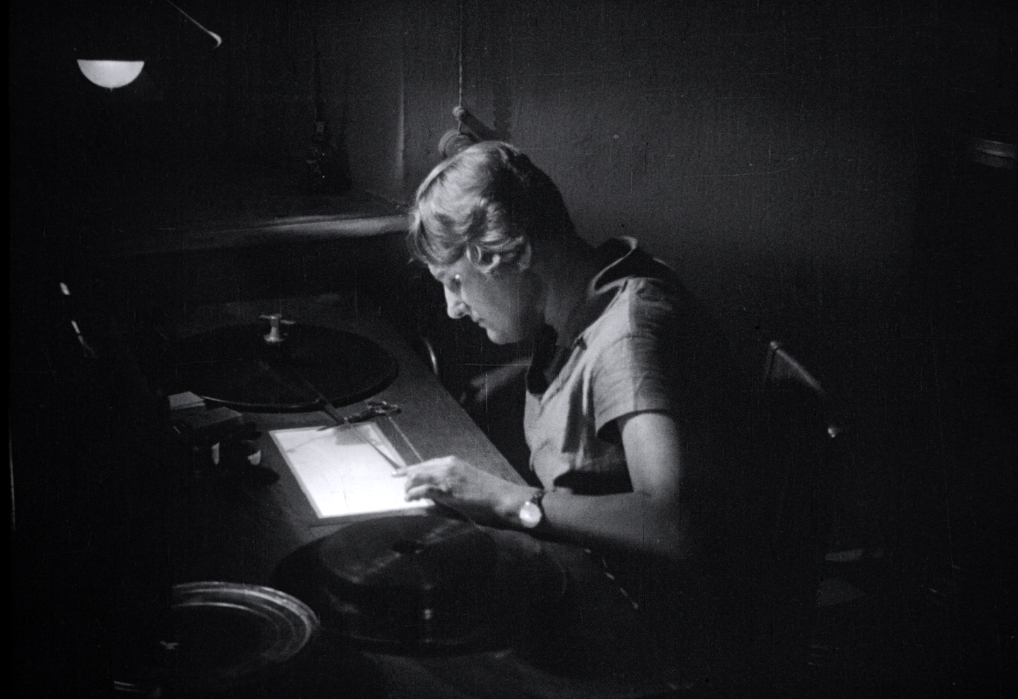


 It Came From the 20th Century